
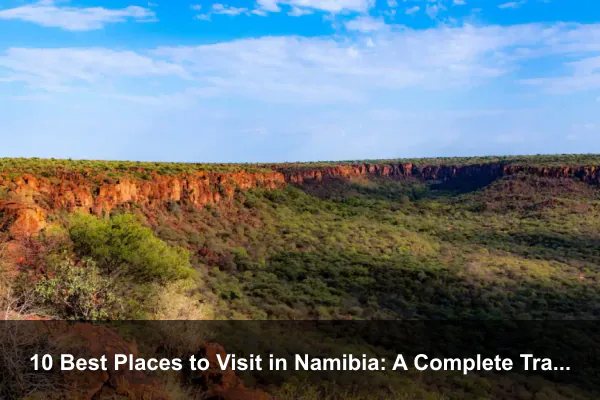
Namibia rewards travelers who plan by distance and landscape, not just by a city list. This guide maps 10 standout places across deserts, wildlife reserves, coast, and canyon country, with quick planning details for timing and access.
The angle is practical and route-friendly: combine iconic stops with less-crowded regions so your trip feels varied, not repetitive. Use each section to decide what fits your style, whether you want self-drive safaris, adventure activities, heritage sites, or dark-sky camping.
Sossusvlei and Deadvlei (Namib-Naukluft National Park)
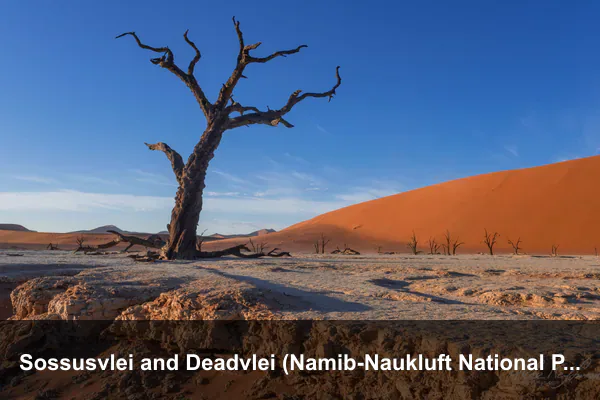
Sossusvlei and nearby Deadvlei, in the Sesriem area of the southern Namib Desert, are Namibia’s signature desert scenes: towering red dunes, brilliant white clay pans, and stark camel-thorn skeletons that look unreal at sunrise. Come for dune climbs, sunrise photography, and some of the country’s most surreal landscapes; Big Daddy and Dune 45 are favorites for first-light views. The key practical move is timing: visit between May and September for cooler mornings, enter right at gate opening, and reach Deadvlei early before heat and crowds build. Most travelers arrive by road from Windhoek in about 5-6 hours, though lodge fly-ins are available for faster access.
| Best for | Dune climbs, sunrise photos, surreal landscapes |
|---|---|
| Location | Sesriem area, southern Namib Desert |
| Best time | May-September for cooler mornings |
| Access | 5-6 hour drive from Windhoek; lodge fly-ins available |
Additional Info: Enter at gate opening and reach Deadvlei early to avoid peak heat and crowds.
Etosha National Park Waterholes
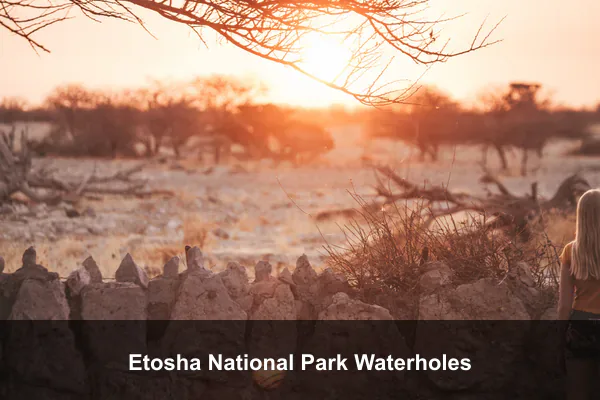
Etosha National Park’s famous waterholes make it one of Namibia’s best safari stops for big-game sightings, self-drive adventure, and wildlife photography. In the June-October dry season, animals gather predictably at water, so you can spend full days driving between viewpoints and spotting elephants, lions, rhinos, and antelope at your own pace. The park sits in northern Namibia, with access through Anderson, Von Lindequist, and Galton gates, and it is easy to reach on paved roads from Windhoek via Outjo or Tsumeb. For the most memorable experience, stay at least one night inside the park so you can watch floodlit waterholes after dark.
| Best for | Big-game sightings, self-drive safaris, photography |
|---|---|
| Location | Northern Namibia (Anderson, Von Lindequist, Galton gates) |
| Best time | June-October dry season |
| Access | Paved approach roads from Windhoek via Outjo or Tsumeb |
Additional Info: Stay inside the park at least one night to use floodlit waterholes after dark.
Skeleton Coast National Park
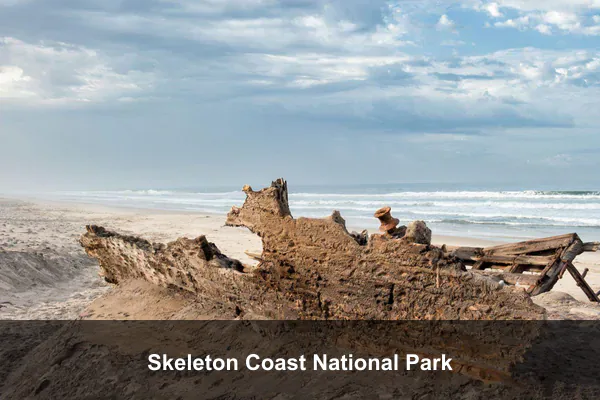
Skeleton Coast National Park is Namibia at its wildest: a haunting stretch of Atlantic wilderness on the northwest coast between the Ugab and Kunene rivers, where dense fog, roaring surf, and shipwreck legends shape every view. Visit for remote landscapes, dramatic coastlines, and unforgettable scenic flights over dunes meeting ocean, then explore with a guided 4×4 to see windswept plains, seal colonies, and rusting wreck relics in near-total silence. April to November brings cooler, more comfortable conditions for long days outdoors, though the coast can feel chilly in any season. Access is best arranged from Swakopmund via guided overland trips or scenic charter flights, and windproof layers are essential year-round.
| Best for | Remote landscapes, scenic flights, dramatic coastlines |
|---|---|
| Location | Northwest coast between Ugab and Kunene |
| Best time | April-November for cooler conditions |
| Access | Best via guided 4×4 or scenic charter from Swakopmund |
Additional Info: Bring windproof layers year-round; ocean air can feel cold even on sunny days.
Swakopmund and Sandwich Harbour 4×4 Route
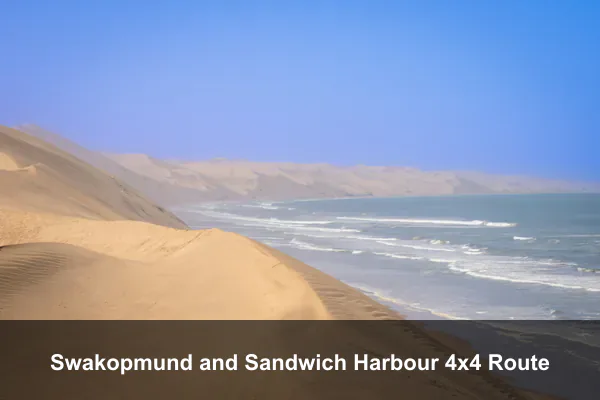
Swakopmund and the Sandwich Harbour 4×4 Route is Namibia’s ultimate coastal adventure gateway, where towering Namib dunes meet the Atlantic in a landscape best experienced on a guided 4×4 excursion. Based on the central coast near Swakopmund and Walvis Bay, you can pair dune driving with sandboarding and coastal activities such as kayaking or dolphin cruises. The best time to visit is October to April, when marine conditions are generally calmer and trips run more reliably. For the classic Sandwich Harbour run, book around low tide, as beach passability depends on timing and can be blocked at high tide. Access is easy: fly to Walvis Bay or drive about 4-5 hours from Windhoek.
| Best for | 4×4 excursions, sandboarding, coastal activities |
|---|---|
| Location | Central coast near Swakopmund and Walvis Bay |
| Best time | October-April for calmer marine conditions |
| Access | Fly to Walvis Bay or drive 4-5 hours from Windhoek |
Additional Info: Book Sandwich Harbour trips around low tide, since beach passability depends on timing.
Twyfelfontein and Damaraland Desert Elephant Country
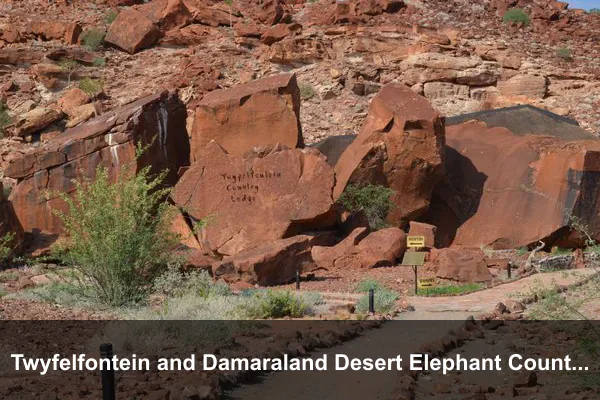
Twyfelfontein in the Kunene Region near Khorixas is one of Namibia’s standout stops for travelers who want ancient rock art and rugged desert wildlife in one trip. Explore the UNESCO-listed engravings with a local guide to understand the symbols and cultural context, then continue into Damaraland’s striking geology of red mesas and dry riverbeds. Early-morning or late-afternoon drives are ideal for tracking desert-adapted elephants along ephemeral river courses, making this area especially rewarding for rock art, geology, and wildlife enthusiasts. Visit from May to October for cooler conditions during game drives. Access is straightforward by gravel-road self-drive, though guided lodge excursions are often the easiest way to combine elephant tracking with expert interpretation at the engravings site.
| Best for | Rock art, geology, desert elephant drives |
|---|---|
| Location | Kunene Region near Khorixas |
| Best time | May-October for cooler game drives |
| Access | Gravel-road self-drive or guided lodge excursions |
Additional Info: Use a local guide at the engravings site to understand symbols and cultural context.
Fish River Canyon
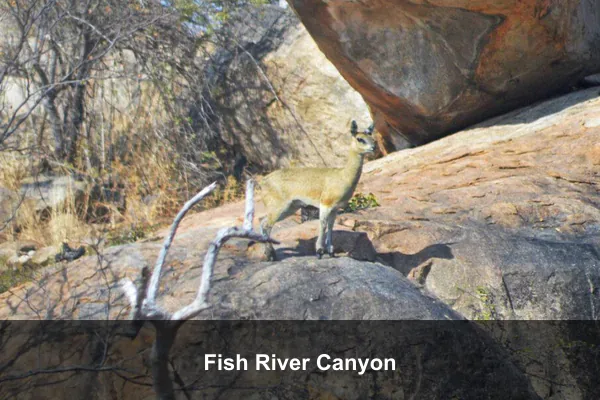
Fish River Canyon, in Namibia’s Karas Region near Hobas and Ai-Ais, is one of Africa’s largest canyons and a top stop for dramatic rim panoramas, ancient rock layers, and remote desert grandeur. Visit for sunrise and sunset viewpoints along the edge, then explore marked lookouts or tackle the famous multi-day trek when conditions allow. The best hiking window is May to September, when temperatures are cooler and safer for long distances. Most travelers reach the area by road from Keetmanshoop, with regional airstrips also serving nearby lodges. Stock up on fuel, water, and supplies in Keetmanshoop before you go, since services around the canyon are limited.
| Best for | Grand viewpoints, multi-day trekking, geology |
|---|---|
| Location | Karas Region near Hobas and Ai-Ais |
| Best time | May-September for hiking-friendly temperatures |
| Access | Drive from Keetmanshoop; regional airstrips nearby |
Additional Info: Stock up on fuel and supplies in Keetmanshoop because services are limited near the canyon.
Kolmanskop Ghost Town and Luderitz Peninsula
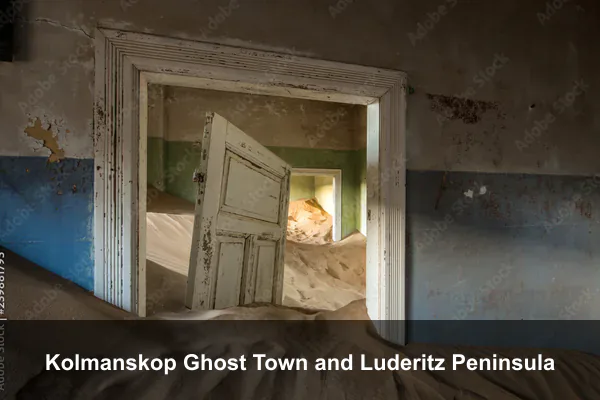
Kolmanskop Ghost Town and the Luderitz Peninsula are among Namibia’s most atmospheric stops, ideal for history lovers, architecture photographers, and travelers who enjoy dramatic coastal drives. Just outside Luderitz on Namibia’s southern Atlantic coast, Kolmanskop’s abandoned diamond-era mansions, slowly reclaimed by desert sand, are best explored with a camera at dawn or late afternoon when light is soft and shadows are long. Pair the visit with windswept viewpoints and heritage streets in nearby Luderitz for a fuller sense of the region’s maritime past. It is reachable in about an hour from Luderitz airport, while coming overland from Windhoek is a much longer journey, so plan timing carefully and confirm Kolmanskop photo-session hours in advance.
| Best for | History, architecture photography, coastal drives |
|---|---|
| Location | Near Luderitz on Namibia’s southern coast |
| Best time | Year-round; best light at dawn and late afternoon |
| Access | 1 hour from Luderitz airport; long overland route from Windhoek |
Additional Info: Confirm Kolmanskop photo-session hours in advance because access windows are fixed.
Bwabwata National Park (Zambezi Region)
In Namibia’s lush Zambezi Region, Bwabwata National Park offers a striking contrast to the country’s deserts, with riverine forests and wetlands between the Kavango and Kwando rivers in the northeast. Visit for boat safaris, exceptional birding, and close sightings of hippos, crocodiles, elephants, and other river wildlife along calm channels and floodplains. July to October is best for concentrated wildlife viewing, while November to April brings peak birdlife with migrant species and greener scenery. The park is reachable by road via the B8/B10 from Rundu, or by flying to Katima Mulilo and continuing overland. Because this is Namibia’s wettest area, pack mosquito repellent and light long sleeves for comfort.
| Best for | Boat safaris, birding, river wildlife |
|---|---|
| Location | Northeast Namibia between Kavango and Kwando rivers |
| Best time | July-October for wildlife; Nov-Apr for birdlife |
| Access | B8/B10 road access from Rundu or Katima Mulilo flights |
Additional Info: Carry mosquito repellent and light long sleeves since this is Namibia’s wettest area.
Waterberg Plateau National Park
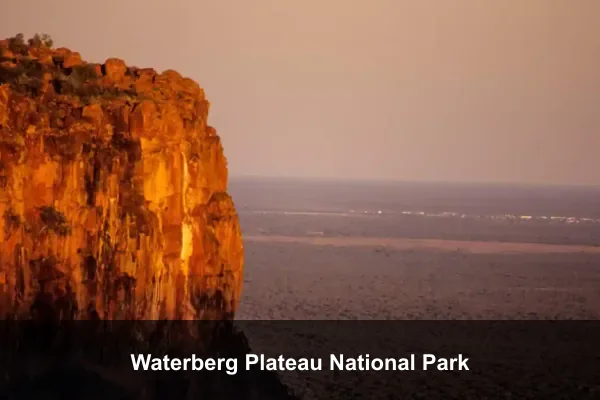
Waterberg Plateau National Park is an easy add-on from Windhoek (about a 3.5-4 hour drive north) and one of Namibia’s best family-friendly stops for short hikes, big escarpment views, and meaningful conservation encounters. In the Otjozondjupa Region near Otjiwarongo, trails climb to lookouts across red sandstone cliffs and bushveld plains, while the reserve also supports programs protecting rare species. Visit between April and October for cooler, more comfortable walking conditions, and begin plateau walks early, as exposed paths heat up quickly after late morning.
| Best for | Short hikes, family stops, rare-species conservation |
|---|---|
| Location | Otjozondjupa Region near Otjiwarongo |
| Best time | April-October for comfortable trails |
| Access | 3.5-4 hour drive north from Windhoek |
Additional Info: Start plateau walks early, as exposed paths heat up quickly after late morning.
Spitzkoppe Granite Peaks
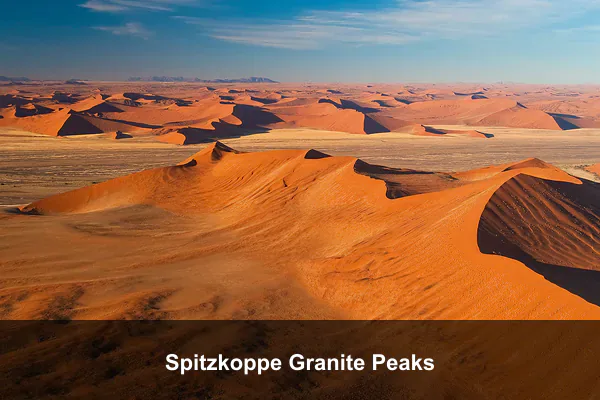
Spitzkoppe’s dramatic granite inselbergs rise from the Namib plains in the Erongo Region between Usakos and Swakopmund, making this a standout stop for adventure and big-sky scenery. Visit for rock climbing on both beginner-friendly slabs and more technical lines, plus scenic wild camping among boulders that glow at sunrise and sunset. After dark, minimal light pollution creates excellent dark-sky stargazing and astrophotography, especially from May to September when nights are clear and crisp. It is accessible by road in about 2.5 hours from Swakopmund or 4.5 hours from Windhoek. Bring offline maps and enough cash, since community-run campsite and entry fees are commonly paid on site.
| Best for | Climbing, astrophotography, scenic camping |
|---|---|
| Location | Erongo Region between Usakos and Swakopmund |
| Best time | May-September for clear, crisp nights |
| Access | 2.5 hours from Swakopmund; 4.5 hours from Windhoek by road |
Additional Info: Bring offline maps and cash for community-run campsite and entry payments.
Tips Before You Go
Namibia is ideal for self-drive travel, but distances are long: start early, keep your tank above half, and carry water, snacks, and a paper backup map. A high-clearance vehicle helps on most gravel routes, while 4×4 is essential for deep-sand sections such as Sandwich Harbour.
Book key stops early for peak dry season (June-October), especially Etosha camps and Sossusvlei lodges. Before each travel day, check park gate hours, permit rules, and road updates, and plan to arrive before dark for safer long-distance driving.
