
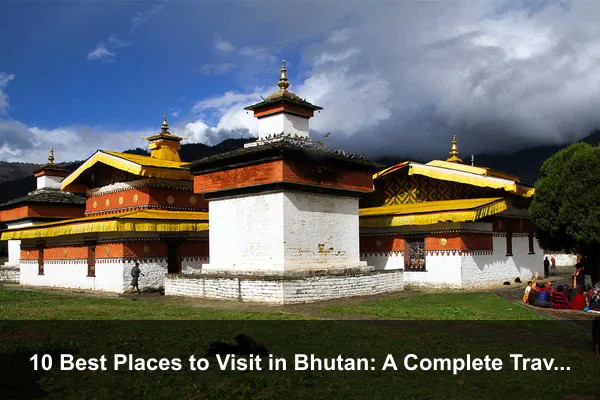
Bhutan is best explored as a slow overland journey rather than a rushed checklist. This plan follows a west-to-east-and-south flow so you can pair iconic landmarks with quieter valleys, weaving communities, and wildlife zones while keeping drive days realistic.
The 10 picks below are built as distinct travel experiences, not repeats: a pilgrimage hike, fortress architecture, high-pass panoramas, crane wetlands, sacred valley circuits, artisan villages, and subtropical conservation landscapes. Use each section to match your interests, timing, and access logistics.
Paro Taktsang (Tiger's Nest Monastery)
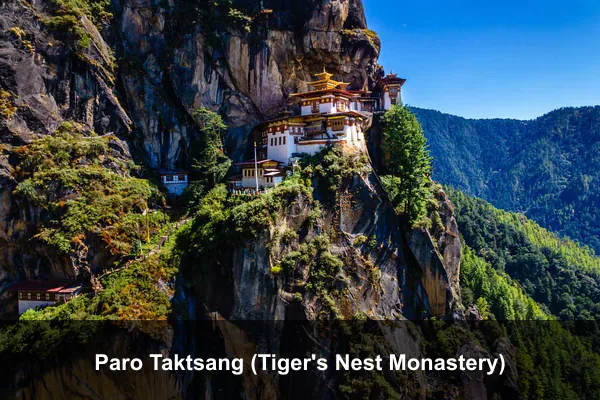
Paro Taktsang (Tiger’s Nest Monastery), perched above the Upper Paro Valley in Paro District, is Bhutan’s signature pilgrimage for first-time visitors who want spiritual history and panoramic hiking in one unforgettable stop. After a 20-30 minute drive from Paro town, take the 2-3 hour uphill trail through pine forest to cliffside viewpoints, prayer flags, and finally the revered monastery linked to Guru Rinpoche’s legends. Start before 8:00 AM for cooler trails and clearer valley views before clouds build, and aim for March-May or September-November when weather and visibility are usually best for this half-day journey.
| Best for | First-time visitors, spiritual history, panoramic hikes |
|---|---|
| Location | Upper Paro Valley, Paro District |
| Best time | March-May and September-November |
| Access | 20-30 min drive from Paro town, then 2-3 hr uphill hike |
Additional Info: Start before 8:00 AM for cooler trails and clearer views before cloud builds.
Buddha Dordenma at Kuenselphodrang
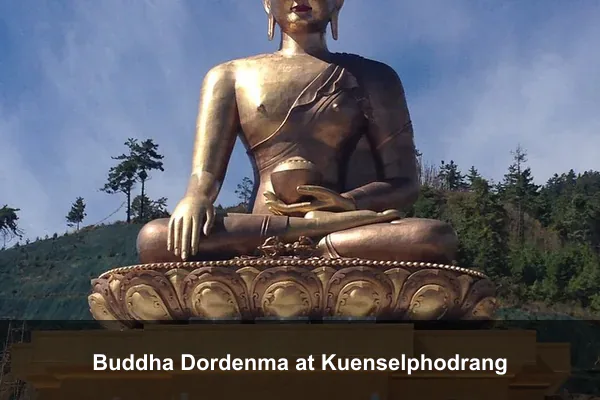
Perched above Thimphu in Kuenselphodrang Nature Park, Buddha Dordenma is one of Bhutan’s easiest high-impact stops: come for sweeping city viewpoints, a calm moment of prayer, and wide-angle photography across the valley. It’s ideal as a short cultural reset between longer drives, with straightforward access just 15–20 minutes from central Thimphu. Visit in October to December for crisp mountain visibility and cleaner light, especially in the late afternoon. Spend time walking the grounds, taking in the giant statue from different angles, and pausing to absorb the quieter pace before returning to town. For a well-rounded evening, pair this stop with Thimphu’s handicraft market, where you can pick up artisan-made textiles, woodwork, and compact souvenirs.
| Best for | City viewpoints, short cultural stop, photography |
|---|---|
| Location | Kuenselphodrang Nature Park, Thimphu |
| Best time | October-December for crisp mountain visibility |
| Access | 15-20 min drive from central Thimphu |
Additional Info: Pair this stop with an evening handicraft market visit for artisan-made souvenirs.
Punakha Dzong and Pho Chhu Suspension Bridge
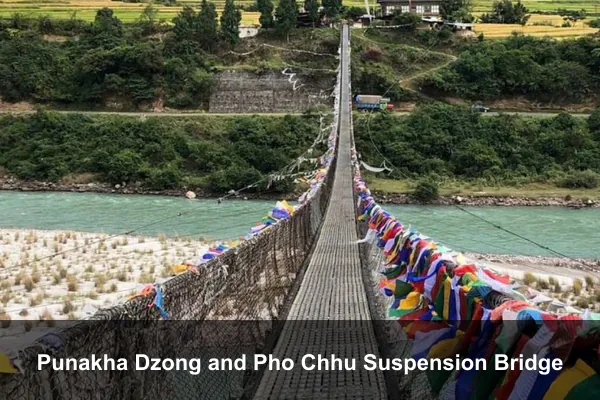
Punakha Dzong, set dramatically at the Pho Chhu-Mo Chhu confluence in Punakha Valley, is one of Bhutan’s most graceful landmarks and a top stop for architecture lovers, river views, and easy walking. Explore its painted courtyards and temple halls, then cross the nearby Pho Chhu Suspension Bridge for a light scenic stroll above the water and valley fields. Plan your visit in March-April or October-November for clear skies and pleasant temperatures. From Thimphu, the journey takes about 2.5-3 hours by road via Dochula, making it an easy day trip or overnight add-on. Wear modest layers, as temple interiors require covered shoulders and knees.
| Best for | Architecture, river scenery, easy walking |
|---|---|
| Location | Punakha Valley at the Pho Chhu-Mo Chhu confluence |
| Best time | March-April and October-November |
| Access | About 2.5-3 hr by road from Thimphu via Dochula |
Additional Info: Wear modest layers since temple halls require covered shoulders and knees.
Dochula Pass and Druk Wangyal Chortens
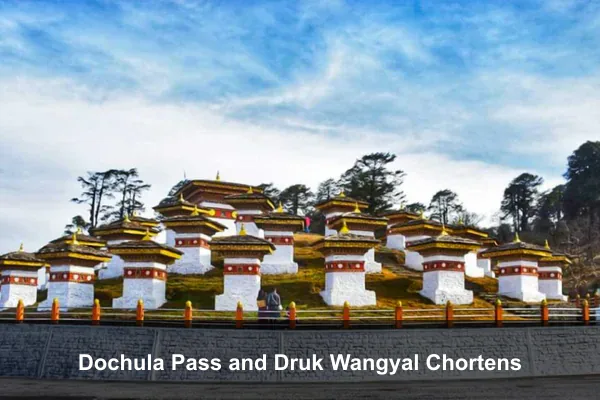
Perched at around 3,100 m on the Thimphu-Punakha highway, Dochula Pass is the perfect way to turn a transfer day into a memorable stop. The 108 Druk Wangyal Chortens form a striking memorial complex, and the surrounding ridge opens to wide Himalayan views that make this one of Bhutan’s best photography pullovers. Visit between October and February for clearer peak panoramas, and aim for an early arrival, since visibility is usually better in the morning than later in the day. From Thimphu, the pass is an easy 1-1.5 hour drive, so you can pause for photos and a short walk before continuing toward Punakha.
| Best for | Himalayan views, road-trip stop, photography |
|---|---|
| Location | Thimphu-Punakha highway, around 3,100 m |
| Best time | October-February for clearer peak views |
| Access | 1-1.5 hr drive from Thimphu |
Additional Info: Arrive early in the day when visibility is usually better than afternoon.
Haa Valley via Chele La Pass
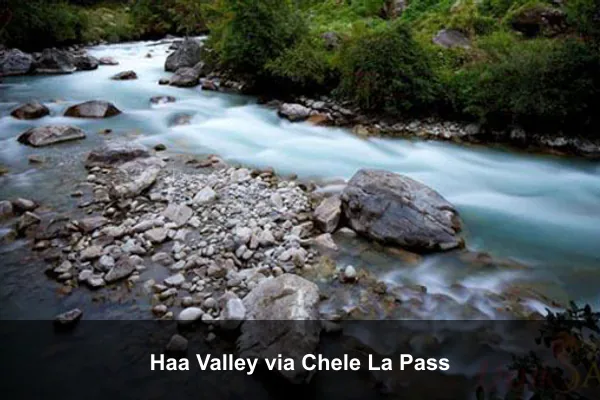
Haa Valley via Chele La Pass is one of western Bhutan’s best low-crowd days out, perfect for travelers seeking quiet valleys, village life, and an offbeat side of the country. The trip takes about two hours from Paro via the Chele La route, combining dramatic high-pass scenery with a gentle descent into Haa District’s farms and small settlements. Spend the day walking through villages, observing local routines, and enjoying a slower cultural pace than in busier hubs. Ask your driver to stop at both Lhakhang Karpo and Lhakhang Nagpo, two important temples that many short tours skip. For the clearest views and most comfortable conditions, go in April-June or September-November.
| Best for | Quiet valleys, village life, offbeat west Bhutan |
|---|---|
| Location | Haa District, western Bhutan |
| Best time | April-June and September-November |
| Access | About 2 hr drive from Paro via Chele La route |
Additional Info: Ask for a stop at Lhakhang Karpo and Lhakhang Nagpo, which many short tours skip.
Gangtey Monastery and Phobjikha Valley Nature Trail
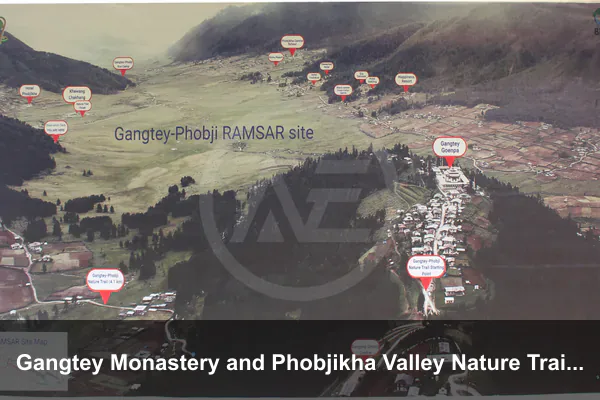
In Gangtey-Phobjikha, Wangdue Phodrang District, Gangtey Monastery overlooks a broad glacial basin where marshy wetlands frame one of Bhutan’s most atmospheric valley walks: the gentle Phobjikha Nature Trail through pine forest, villages, and open crane meadows. This area is best for birdwatching, wetlands, and easy trekking, especially from late October to February when endangered black-necked cranes winter here. Bring binoculars for distant sightings, walk quietly, and stay on marked paths to avoid disturbing sensitive crane habitat. From Punakha or Wangdue, expect a 2.5-3 hour drive, then allow a full day to combine monastery views with a relaxed valley hike.
| Best for | Birdwatching, wetlands, gentle trekking |
|---|---|
| Location | Gangtey-Phobjikha, Wangdue Phodrang District |
| Best time | Late October-February for black-necked cranes |
| Access | 2.5-3 hr drive from Punakha or Wangdue |
Additional Info: Bring binoculars and stay on marked paths to avoid disturbing crane habitat.
Bumthang Sacred Valley Circuit (Jakar, Kurjey, Jambay)
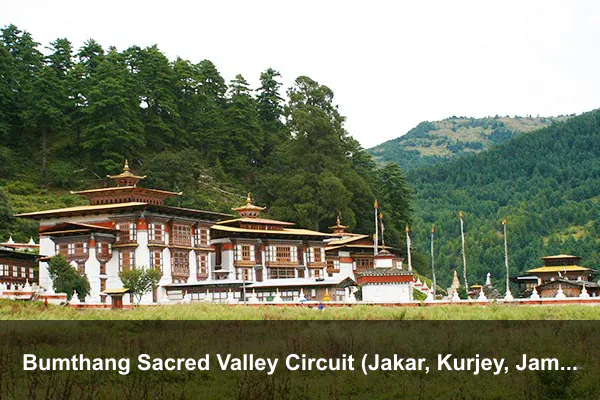
The Bumthang Sacred Valley Circuit linking Jakar, Kurjey, and Jambay in Choekhor Valley, Bumthang District, is Bhutan’s spiritual heartland and is best for temple history, cultural immersion, and peaceful valley landscapes. Make it a full-day route: the monasteries are close by valley road, but each site deserves unhurried time for shrines, murals, rituals, and local encounters. Start around Jakar, continue to Kurjey Lhakhang for its deep religious significance, and end at ancient Jambay Lhakhang to feel living Buddhist tradition in action. Visit in March-May or September-November for the best weather and clearer mountain views. You can reach Bumthang by a 6-7 hour drive from Trongsa or by domestic flight to Bumthang Airport.
| Best for | Temple history, cultural immersion, valley landscapes |
|---|---|
| Location | Choekhor Valley, Bumthang District |
| Best time | March-May and September-November |
| Access | 6-7 hr drive from Trongsa or flight to Bumthang Airport |
Additional Info: Keep this as a full-day circuit because visits are close together but not quick.
Trongsa Dzong and Ta Dzong Museum
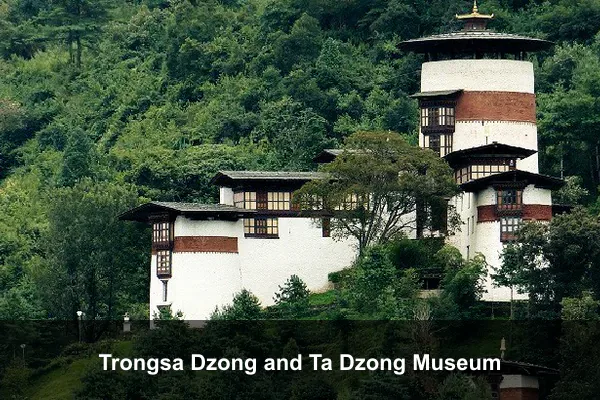
Set in Trongsa town, central Bhutan, Trongsa Dzong and the nearby Ta Dzong Museum are essential for understanding how Bhutan unified its regions: the fortress stands above a strategic gorge that once controlled east-west movement, while the museum explains royal and military history. Visit for layered courtyards, dramatic ramparts, and museum exhibits, then continue through the dzong’s temples and viewpoints to see fortress design in action. For the best full-dzong photo, stop at the highway viewpoint first. Practical detail: this stop is on the East-West Highway, about 6-7 hours by road from Thimphu, and is best visited in March-May or October-December for clearer weather and easier travel.
| Best for | History lovers, fortress views, museum visits |
|---|---|
| Location | Trongsa town, central Bhutan |
| Best time | March-May and October-December |
| Access | On the East-West Highway, about 6-7 hr from Thimphu |
Additional Info: Take photos from the highway viewpoint first for the best full-dzong perspective.
Khoma Village Weaving Experience (Lhuentse)
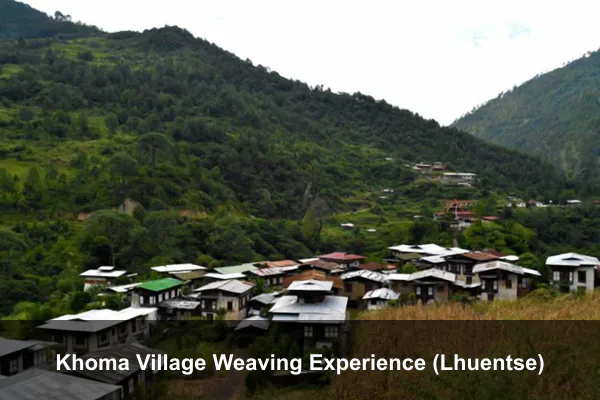
Khoma Village in Khoma Gewog, Lhuentse District, is one of Bhutan’s most distinctive living textile communities, ideal for textiles, artisan culture, and eastern Bhutan detours. Visit family homes and small weaving spaces to watch women produce intricate kishuthara and other handwoven patterns on backstrap looms, then buy pieces directly from households to support local livelihoods. The village is typically reached by about a 3-hour drive from Mongar, followed by a short walk through the settlement. Plan your trip between October and April, when roads are usually drier and travel is easier. If you plan to shop, carry smaller cash notes, as purchases are often made directly with individual weavers.
| Best for | Textiles, artisan culture, eastern Bhutan detours |
|---|---|
| Location | Khoma Gewog, Lhuentse District |
| Best time | October-April for drier road conditions |
| Access | About 3 hr drive from Mongar, then short village walk |
Additional Info: Carry smaller cash notes if buying handwoven pieces directly from households.
Royal Manas National Park (Panbang Gateway)
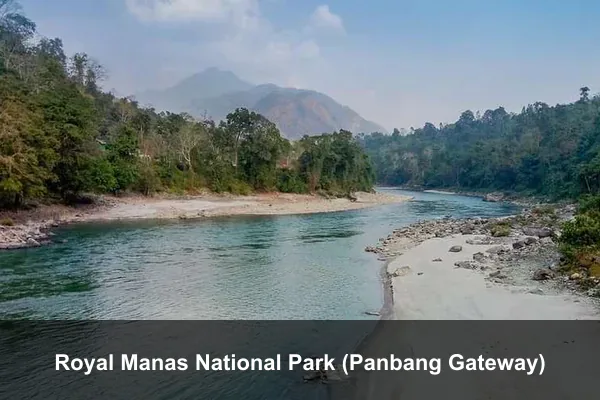
At Bhutan’s subtropical southern frontier, Royal Manas National Park, reached through the Panbang gateway across Zhemgang, Sarpang, and Pemagatshel, is the country’s top choice for wildlife seekers, river rafting fans, and truly remote eco-tourism. Guided safaris and forest walks can reveal golden langurs, hornbills, elephants, and rich riverine habitats, while calm stretches of the Manas River support scenic boat rides and soft-adventure rafting. Plan your visit from November to April, when conditions are drier and cooler; monsoon months bring heavy rain, heat, and difficult trails. Access requires a long overland transfer to Panbang, so arrange transport, permits, and local guides in advance, and book boats, trackers, and lodges early because capacity is limited.
| Best for | Wildlife, rafting, remote eco-tourism |
|---|---|
| Location | Panbang area, across Zhemgang-Sarpang-Pemagatshel |
| Best time | November-April; avoid peak monsoon heat and rain |
| Access | Long overland transfer to Panbang, with guide-led arrangements |
Additional Info: Book activities early because local boats, trackers, and lodges run limited capacity.
Tips Before You Go
Before booking, verify the latest Bhutan visa process, Sustainable Development Fee rules, and guide requirements on official tourism channels, then secure flight and route logistics early. Drive times are longer than map distances suggest, so plan one major transfer per day and keep your itinerary flexible.
Pack layers for rapid weather changes, comfortable shoes for steep monastery stairs, and modest clothing for religious sites. Carry some cash for rural stops, keep basic altitude and motion-sickness medication, and add a buffer day for weather or road delays.
