
Botswana is built for travelers who want space, wildlife density, and low-volume safari experiences rather than crowded circuits. This plan uses a contrast-first route, moving from delta waterways to desert pans to heritage sites, so readers can shape either a fly-in luxury trip or a 4×4 self-drive journey.
Each section spotlights one specific place with the planning details readers need quickly: what it is best for, where it is, when to go, and how to reach it. The selection deliberately goes beyond standard Big Five lists by adding culture, archaeology, and active safari regions many first-time itineraries skip.
Okavango Delta
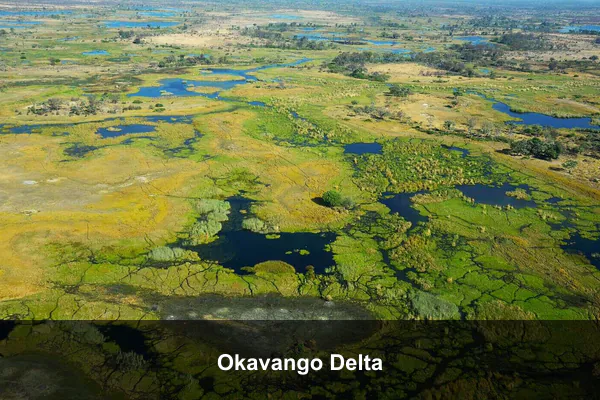
The Okavango Delta, the world’s largest inland delta in northwest Botswana (Ngamiland), is best for fly-in water safaris, classic mokoro trips, and luxury bush camps. Base your trip around Maun and Delta airstrips, with access by light aircraft from Maun or Kasane; some sectors can also be reached by 4×4 through Moremi. Visit from June to October, when floodwaters are at their peak and wildlife viewing is most rewarding. Spend mornings drifting quietly by mokoro through reed-lined channels, then take a boat safari in the afternoon to cover larger lagoons and spot elephants, hippos, antelope, and prolific birdlife. Bring a waterproof dry bag, as channel spray during mokoro rides can quickly soak camera gear.
| Best for | Fly-in water safaris, mokoro trips, luxury bush camps |
|---|---|
| Location | Northwest Botswana (Ngamiland), around Maun and Delta airstrips |
| Best time | June to October for peak floods and game viewing |
| Access | Light aircraft from Maun or Kasane; some sectors via 4×4 through Moremi |
Additional Info: Use a waterproof dry bag because channel spray can soak camera gear during mokoro rides.
Chobe Riverfront
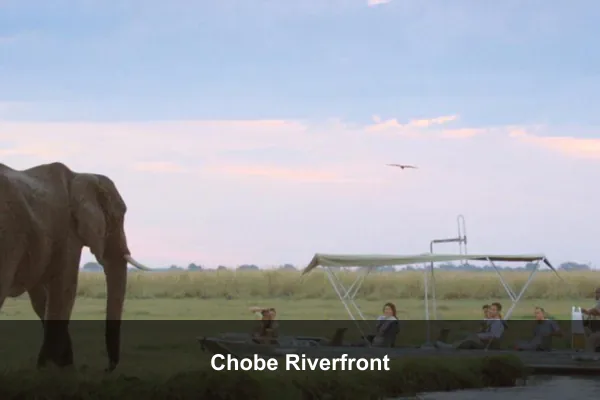
Chobe Riverfront, centered on Kasane at the northern edge of Chobe National Park, is one of Botswana’s easiest and most rewarding safari regions, especially for first-time visitors. It is best known for boat safaris and exceptional elephant sightings, with huge herds gathering along the riverbanks in the dry season. Plan two complementary outings on the same corridor: an afternoon cruise for dramatic light and close water-level wildlife scenes, then an early morning game drive to catch different behavior as temperatures are cooler and animals are more active inland. The best time to visit is May to October, when wildlife concentrations are highest. Access is simple: fly to Kasane International Airport, then take a short road transfer to your lodge.
| Best for | Boat safaris, elephant sightings, first-time Botswana trips |
|---|---|
| Location | Kasane, northern edge of Chobe National Park |
| Best time | May to October in the dry season |
| Access | Fly to Kasane International Airport, then short road transfer |
Additional Info: Book an afternoon cruise and an early morning drive to see very different behavior on the same river corridor.
Moremi Game Reserve
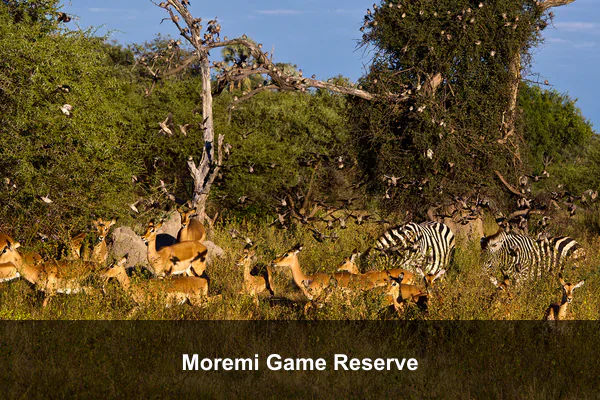
Moremi Game Reserve, in the central and eastern Okavango Delta, is one of Botswana’s best stops for travelers who want both land-and-water safaris in a protected core wilderness. It suits self-drive campers and guided visitors alike, with mixed habitats of floodplains, lagoons, mopane woodland, and grassland that support elephants, lions, leopards, buffalo, and often rhino, giving strong Big Five potential. Visit from July to October, when drier conditions concentrate wildlife and sightings are most reliable. You can enter by 4×4 from Maun via South Gate or fly to nearby bush airstrips for lodge transfers. If driving, stock up on fuel, water, and basic supplies in Maun, since in-park services are limited.
| Best for | Self-drive campers, mixed habitats, Big Five potential |
|---|---|
| Location | Central and eastern Okavango Delta |
| Best time | July to October for concentrated sightings |
| Access | 4×4 from Maun via South Gate or fly to nearby bush airstrips |
Additional Info: Stock fuel, water, and basic supplies in Maun because in-park services are limited.
Savuti and Linyanti
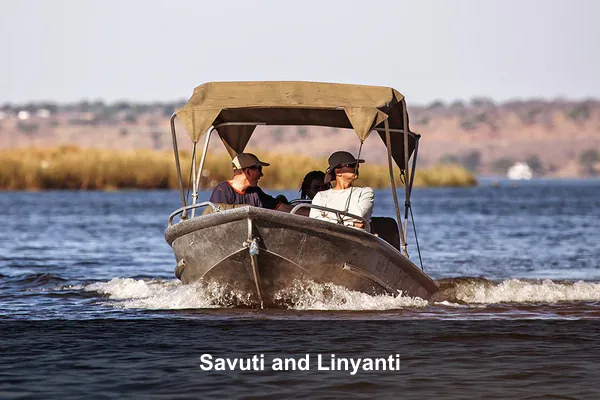
Savuti and Linyanti, in western Chobe between the Savuti Marsh and Linyanti wetlands, are ideal for repeat safari travelers seeking raw wilderness, fewer vehicles, and some of Botswana’s best predator drama. Visit from June to October, when wildlife gathers near permanent water and lion and hyena sightings are strongest, then spend your days on game drives tracking big cats, elephants, and wild dogs across floodplains and mopane woodland. Remote camps keep the experience intimate and off-grid, while access is usually by charter flight to Savute or Linyanti airstrips. Self-driving is possible but tough, with deep-sand 4×4 tracks, so lower tire pressure, carry recovery boards, and budget extra time for slow, demanding travel.
| Best for | Lion and hyena sightings, remote camps, repeat safari travelers |
|---|---|
| Location | Western Chobe region between Savuti Marsh and Linyanti wetlands |
| Best time | June to October when wildlife gathers near permanent water |
| Access | Charter flights to Savute or Linyanti airstrips, or demanding 4×4 tracks |
Additional Info: If self-driving, lower tire pressure for deep sand and carry recovery boards.
Central Kalahari Game Reserve
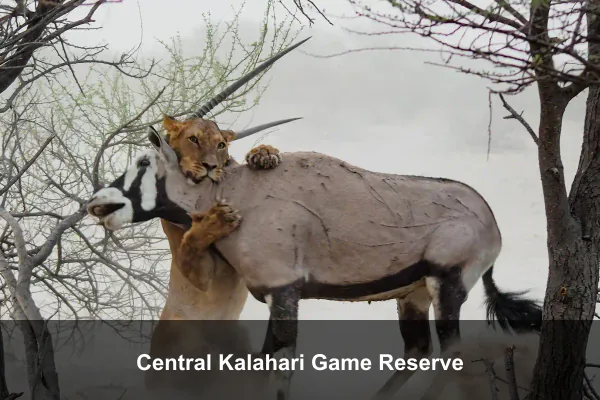
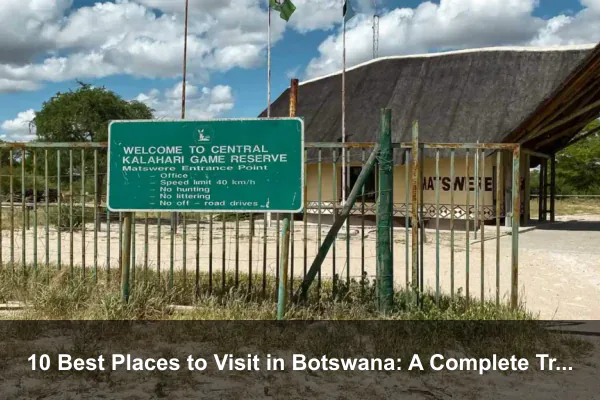
Central Kalahari Game Reserve in central Botswana (Ghanzi and Kweneng districts) swaps delta wetlands for vast grasslands, desert silence, and sightings of black-maned Kalahari lions. Visit for true remoteness, huge night skies, and desert-adapted wildlife such as oryx, springbok, and brown hyena, then spend evenings stargazing far from any light pollution. The best wildlife window is December to April, after summer rains green the pans and draw animals onto open plains. Most travelers enter by 4×4 through Matswere, Xade, or Tsau gates, while a few concessions offer fly-in lodge access. Self-drivers should carry extra fuel and at least one reserve day of water beyond the planned route.
| Best for | Remote wilderness, stargazing, desert-adapted wildlife |
|---|---|
| Location | Central Botswana (Ghanzi and Kweneng districts) |
| Best time | December to April after summer rains |
| Access | 4×4 via Matswere, Xade, or Tsau gates; fly-in lodges at select concessions |
Additional Info: Carry extra fuel and at least one reserve day of water beyond your planned route.
Makgadikgadi Pans Game Reserve
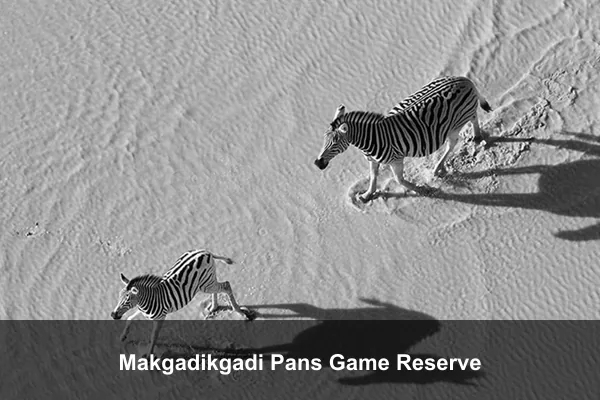
Makgadikgadi Pans Game Reserve, in Botswana’s Boteti region (west of Nata and south of Nxai Pan), is made for travelers who love vast horizons, seasonal wildlife drama, and unforgettable night skies. Visit from December to March, when rains tint the pans green and zebra migration sweeps through, creating superb game-viewing and photography. By day, explore open salt-pan plains and Boteti-side wildlife routes; by night, join guided stargazing or full-moon pan drives for surreal lunar landscapes. Access is typically by road transfer from Maun or Nata, with a 4×4 essential once you leave main routes. Full-moon outings are limited and sell out early, so book specialized activities well in advance.
| Best for | Wide-open landscapes, zebra migration, night sky photography |
|---|---|
| Location | Boteti region, west of Nata and south of Nxai Pan |
| Best time | December to March for migration and greener pans |
| Access | Road transfers from Maun or Nata; 4×4 needed off main routes |
Additional Info: Full-moon pan outings sell out early, so reserve specialized activities in advance.
Nxai Pan National Park and Baines' Baobabs
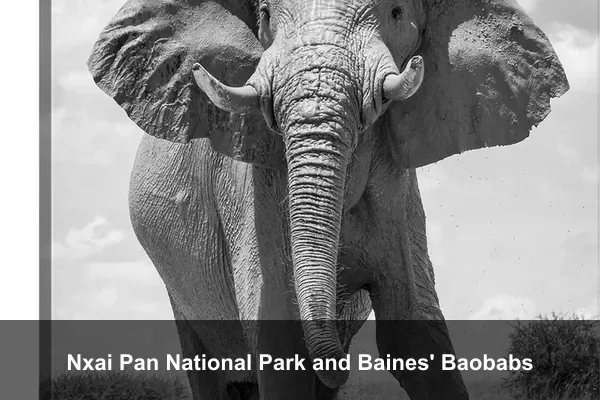
Nxai Pan National Park, north of the A3 Nata-Maun road and adjoining Makgadikgadi, shines from December to April, when rains refresh the pans and draw in zebra, predators, and excellent cheetah sightings. Visit for wet-season game drives, then continue to Baines’ Baobabs for one of Botswana’s most iconic photography scenes, especially under big stormy skies and mirror-like puddles. Access is via the A3 turnoff followed by sandy tracks to the gate and campsites, so a high-clearance 4×4 is the practical choice. Before entering, ask gate staff about current track conditions, since heavy rain can quickly change access and driving times.
| Best for | Wet-season game drives, cheetah country, landscape photography |
|---|---|
| Location | North of the A3 Nata-Maun road, adjoining Makgadikgadi |
| Best time | December to April when rains refresh the pans |
| Access | A3 turnoff plus sandy tracks to gate and campsites |
Additional Info: Ask gate staff about current track conditions because heavy rain can change access quickly.
Kgalagadi Transfrontier Park (Botswana Side)
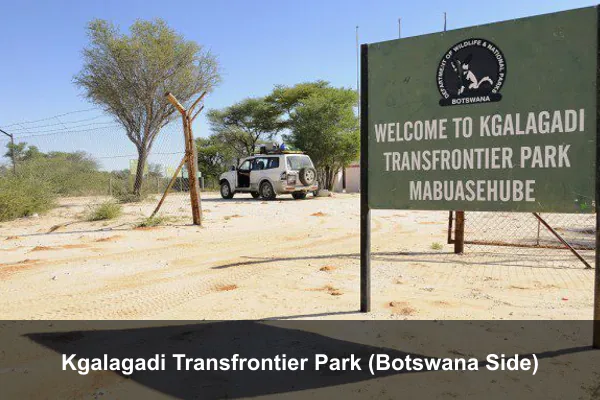
Kgalagadi Transfrontier Park’s Botswana side is for travelers who want raw Kalahari wilderness: red dunes, fossil pans, and long, low-traffic sand tracks where black-maned lions, cheetahs, and other desert predators are the main spectacle. It is best tackled as a hardcore high-clearance 4×4 expedition, with remote wilderness camps and self-drive routes that reward patience and careful planning more than speed. Set in southwest Botswana along the South Africa border, the park is most comfortable from May to September, when cooler days make driving and camping easier. Enter via Two Rivers or Mabuasehube, and arrange a two-vehicle convoy early, as Botswana wilderness trails are typically traveled in pairs for safety.
| Best for | Hardcore 4×4 expeditions, Kalahari predators, wilderness camping |
|---|---|
| Location | Southwest Botswana along the South Africa border |
| Best time | May to September for cooler days and easier camping |
| Access | Entry via Two Rivers or Mabuasehube with high-clearance 4×4 |
Additional Info: Botswana wilderness trails usually require two vehicles traveling together, so arrange a convoy early.
Tsodilo Hills
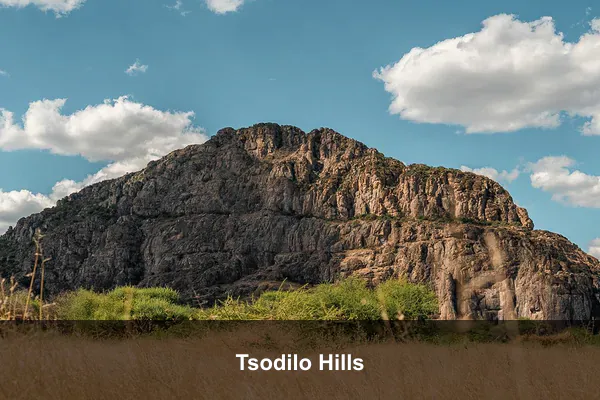
In northwest Botswana near Shakawe, Tsodilo Hills is a sacred landscape where dramatic granite outcrops hold one of Africa’s richest concentrations of rock art, making it ideal for rock-art lovers, guided hikers, and cultural heritage travelers. Follow marked trails with an on-site local guide to visit key panels, viewpoints, and caves while learning how communities have used these hills for ceremony and storytelling over centuries. For deeper context, hire a San or Hambukushu guide, who can explain site etiquette and symbolic meanings that are easy to miss on your own. Plan your visit from April to October, when cooler, drier weather makes hiking far more comfortable, and reach the site by road transfer from Shakawe.
| Best for | Rock art, guided hikes, cultural heritage travelers |
|---|---|
| Location | Northwest Botswana near Shakawe |
| Best time | April to October for comfortable hiking temperatures |
| Access | Road transfer from Shakawe; local guides available on site |
Additional Info: Hire a San or Hambukushu guide to understand site etiquette and symbolic meanings.
Northern Tuli Game Reserve
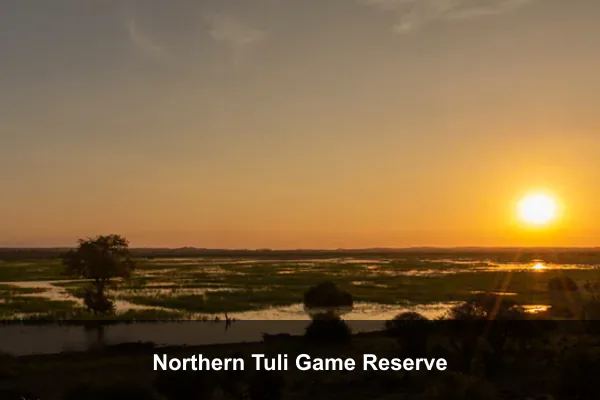
Northern Tuli Game Reserve closes your Botswana journey with a more active safari style: dramatic sandstone cliffs, river valleys, and private concessions at the Limpopo-Shashe confluence in northeastern Botswana. Visit for game drives that can be paired with guided bike or horse safaris for a fresh, ground-level wildlife perspective, then add archaeology sites and village visits for cultural depth. It is ideal for travelers who want movement, variety, and fewer crowds than larger parks. Plan your trip from May to September, when cooler weather makes outdoor exploration more comfortable. Access is straightforward by self-drive from Francistown or Gaborone, or via lodge transfers from Johannesburg.
| Best for | Active safaris, horse riding, archaeology and village visits |
|---|---|
| Location | Northeastern Botswana at the Limpopo-Shashe confluence |
| Best time | May to September for cooler outdoor activities |
| Access | Self-drive from Francistown or Gaborone, or lodge transfers from Johannesburg |
Additional Info: Combine one classic game drive with a guided bike or horse safari for a different wildlife perspective.
Tips Before You Go
Botswana rewards early planning. Peak safari months (June to October) can book out far in advance, especially in fly-in concessions. If you are self-driving, use a proper 4×4 setup, plan fuel and water conservatively, and build buffer time between long remote stretches.
Before departure, confirm current park fees, road conditions, and route access on official sources like the Botswana Tourism Organisation; for Tsodilo context, review the UNESCO Tsodilo listing. Keep offline maps, sun protection, and light layers for big day-night temperature swings.
