
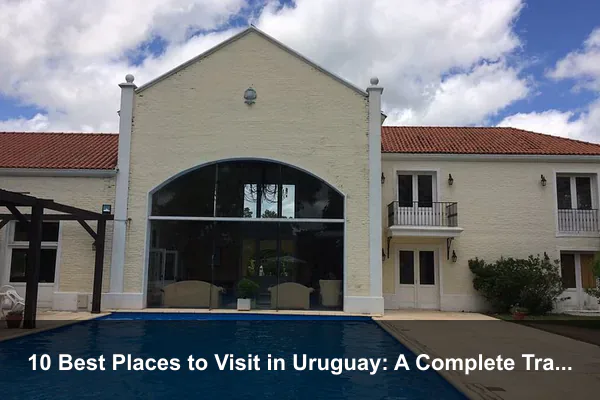
Uruguay is one of South America’s easiest countries to explore: short travel distances, reliable intercity buses, and a mix of Atlantic coast, colonial towns, and ranch country. This guide is structured for travelers who want more than a beach weekend, combining classic highlights with less-covered nature and culture stops.
The 10 places below form a practical route across the country, from Montevideo and Colonia to Rocha’s wild coast and the thermal springs in the northwest. Use it to design a 7- to 14-day itinerary based on your pace, interests, and season.
Montevideo's Ciudad Vieja and the Rambla
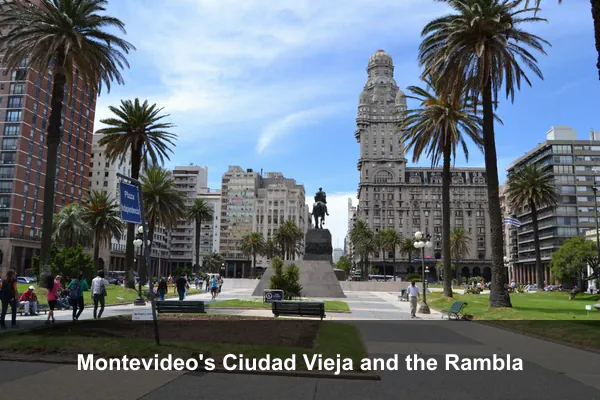
Start your Uruguay trip in Montevideo’s Ciudad Vieja, where heritage facades and Plaza Independencia provide an easy first-day orientation before you follow the Rambla east toward Pocitos for sea views and sunset walks. This area is ideal for first-time visitors who want history, markets, and local life in one sweep: explore old-town streets, then slow down on the waterfront with mate. On Sundays, combine the Tristan Narvaja market with a mate stop along Parque Rodo’s stretch of the Rambla. You can visit the city year-round, but October to April offers longer evenings for strolling. Fly into Carrasco Airport and take a taxi or bus into central Montevideo to start.
| Best for | First-time visitors, markets, sunset walks |
|---|---|
| Location | Central Montevideo, from Plaza Independencia to Pocitos |
| Best time | October-April for long evenings; city visits year-round |
| Access | Fly into Carrasco Airport; taxi or bus into the center |
Additional Info: On Sundays, combine the Tristan Narvaja market with a mate stop along Parque Rodo's stretch of the Rambla.
Colonia del Sacramento Historic Quarter
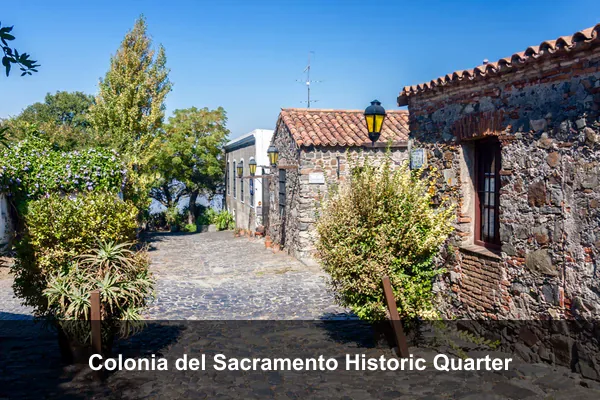
Colonia del Sacramento’s Historic Quarter, in Colonia Department in southwest Uruguay, is one of the country’s most atmospheric stops: a UNESCO-listed maze of cobbled lanes, pastel facades, and stone ruins that reveal centuries of Portuguese-Spanish rivalry. It’s best for history lovers, couples, and easy day trips, with highlights including wandering Calle de los Suspiros, browsing small museums, and lingering on the Río de la Plata waterfront. For the most memorable panorama, climb the lighthouse near golden hour to see terracotta rooftops and the river edge glowing in soft light. Visit in March-May or September-November for mild weather, and reach town easily by bus from Montevideo or by ferry connections via Buenos Aires.
| Best for | History lovers, couples, day trips |
|---|---|
| Location | Colonia Department, southwest Uruguay |
| Best time | March-May and September-November for mild weather |
| Access | Bus from Montevideo or ferry connections via Buenos Aires |
Additional Info: Climb the lighthouse near golden hour for the best view over the old town rooftops and river edge.
Punta del Este Peninsula and Playa Brava
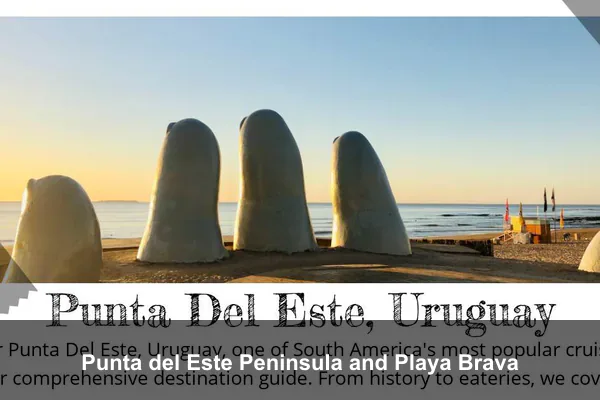
On Uruguay’s southeast coast in Maldonado Department, Punta del Este Peninsula and Playa Brava combine glamorous resort energy with dramatic Atlantic scenery, making it ideal for beach days, nightlife, and iconic photo stops. Spend the day between the peninsula’s viewpoints and Playa Brava’s rolling surf, then head into town for lively bars and late dinners. Don’t miss La Mano sculpture, and go early in the morning for softer light and fewer crowds. For peak atmosphere, visit in December to February during full resort season, though November to March is generally excellent. Getting there is easy with frequent buses from Montevideo, and the nearby Punta del Este airport adds convenient access.
| Best for | Beach days, nightlife, iconic photo spots |
|---|---|
| Location | Maldonado Department, southeast coast |
| Best time | December-February for full resort season; November-March overall |
| Access | Frequent buses from Montevideo; airport near Punta del Este |
Additional Info: Visit La Mano sculpture early in the morning to avoid crowds and harsh midday light.
Jose Ignacio and Garzon
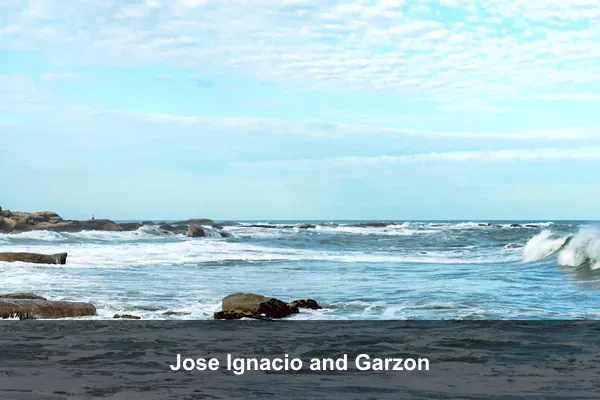
Jose Ignacio and nearby Garzon pair laid-back luxury beaches with vineyard country and small-village dining, making this corner east of Punta del Este in Maldonado Department ideal for food-focused travelers seeking boutique stays and a calmer coast. Spend mornings on quiet sands and evenings moving between acclaimed bistros, grills, and winery tables in Garzon, with tastings and long lunches among rolling vines. December to March is best for classic beach life, while April brings softer crowds and a more relaxed rhythm without losing the culinary appeal. Go by rental car or private transfer so you can easily combine coast and countryside, and book top restaurants several days ahead in peak summer, especially on Jose Ignacio weekends.
| Best for | Food-focused travelers, boutique stays, relaxed beaches |
|---|---|
| Location | East of Punta del Este in Maldonado Department |
| Best time | December-March for beach life; April for quieter days |
| Access | Best reached by rental car or private transfer |
Additional Info: Reserve top restaurants several days ahead in peak summer, especially around Jose Ignacio weekends.
Cabo Polonio National Park
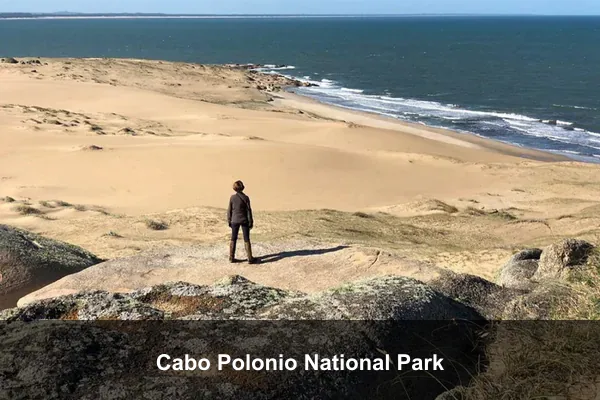
Cabo Polonio National Park on Uruguay’s Atlantic coast in Rocha Department is perfect for nature lovers seeking unplugged travel and wild beaches. Reach this off-grid village by authorized 4×4 trucks from the Route 10 access terminal, then wander giant shifting dunes, climb the lighthouse for panoramic ocean views, and watch one of South America’s largest sea lion colonies on nearby rocks. With no conventional streets and limited infrastructure, the park feels remote and raw, especially in summer. Visit between November and March for milder weather and longer daylight, and bring cash plus a power bank, since electricity can be intermittent and card connectivity is often unreliable.
| Best for | Nature lovers, unplugged travel, wild beaches |
|---|---|
| Location | Rocha Department, Atlantic coast |
| Best time | November-March for milder weather and longer daylight |
| Access | Authorized 4×4 trucks from the Route 10 access terminal |
Additional Info: Bring cash and a power bank, as electricity and card connectivity can be limited in the village.
Punta del Diablo and Santa Teresa National Park
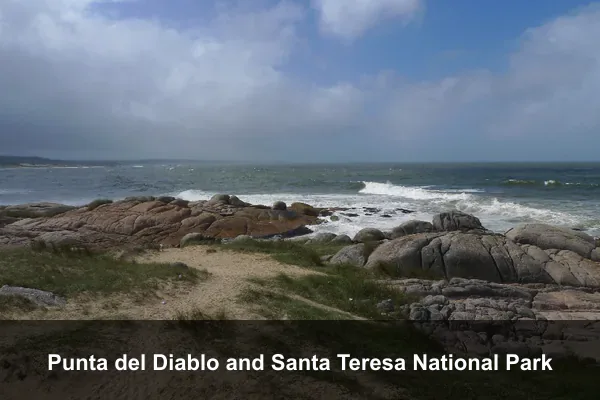
Punta del Diablo and nearby Santa Teresa National Park on Uruguay’s northern Rocha coast, close to Brazil, are ideal for surfers, campers, and budget-minded beach travelers who want raw Atlantic scenery with a laid-back village vibe. Spend mornings on Punta del Diablo’s breaks, then follow forest roads into Santa Teresa for dune-backed beaches, trails, and the restored 18th-century Fortaleza de Santa Teresa. Enter the park early to climb to the fortress viewpoint and enjoy quieter sand before midday arrivals. December to March brings the warmest beach weather and liveliest surf-town energy, while April to May offers fewer crowds and easier pacing. Reach the area by intercity bus along the Rocha coast, then continue by local transport to the park and beaches.
| Best for | Surfing, camping, budget coastal trips |
|---|---|
| Location | Northern Rocha coast near the Brazil border |
| Best time | December-March for beach weather; April-May for fewer crowds |
| Access | Intercity bus to Rocha coast, then local transport |
Additional Info: Enter Santa Teresa early to pair the fortress viewpoint with quieter beaches before midday arrivals.
Quebrada de los Cuervos
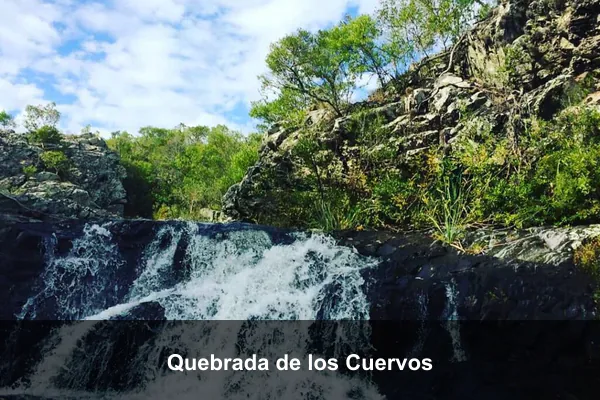
Quebrada de los Cuervos, in the Treinta y Tres Department of eastern inland Uruguay, is one of the country’s most dramatic nature escapes, best for hikers and birdwatchers seeking interior landscapes rather than coast. Follow canyon trails down into the quebrada for sweeping views, native forest, and frequent sightings of raptors and other local birdlife. Plan your visit between April and September, when cooler temperatures make the climbs and descents more comfortable. Access is easiest by car or with a pre-arranged transfer from Treinta y Tres city, and wear grippy shoes since downhill sections can turn slippery after rain.
| Best for | Hiking, birdwatching, interior nature |
|---|---|
| Location | Treinta y Tres Department, eastern inland Uruguay |
| Best time | April-September for cooler trail conditions |
| Access | Best by car or pre-arranged transfer from Treinta y Tres city |
Additional Info: Wear grippy shoes because the descent sections can become slippery after rain.
Esteros de Farrapos Wetlands
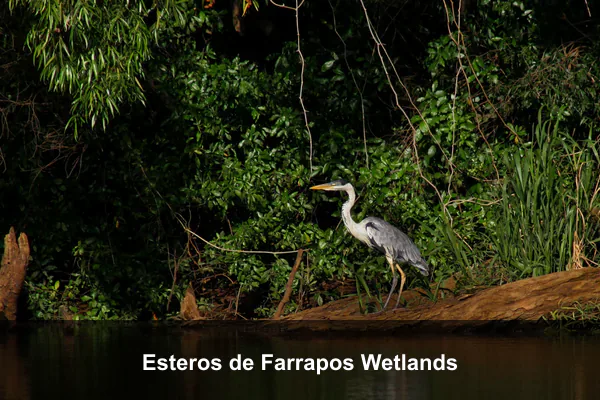
Esteros de Farrapos Wetlands, in Rio Negro Department along the Uruguay River, is one of Uruguay’s best lesser-known escapes for birders, slow nature travel, and quiet kayaking through island channels and marshes. This national park rewards patient exploration with strong birdwatching, especially from September to March when migratory species are most active. Reach the area by road via Fray Bentos or Nuevo Berlin, then head out with local guides who know the waterways and access points. Bring insect repellent and your own binoculars, as on-site services and gear rentals are limited.
| Best for | Birders, slow nature travel, kayaking |
|---|---|
| Location | Rio Negro Department along the Uruguay River |
| Best time | September-March for migratory species activity |
| Access | Road access via Fray Bentos or Nuevo Berlin with local guides |
Additional Info: Carry insect repellent and binoculars, since services and gear rentals are limited on-site.
Tacuarembo and Valle Eden Gaucho Route
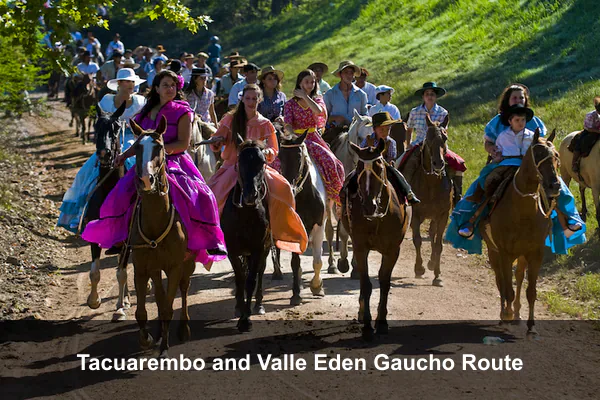
Tacuarembo and Valle Eden, in north-central Uruguay’s Tacuarembo Department, offer one of the country’s most immersive gaucho experiences, perfect for cultural travelers who enjoy folklore and countryside stays. Explore working estancias on horseback, watch traditional horsemanship and folk performances, and visit Valle Eden’s music heritage sites to connect ranching life with regional identity. March is the standout month for the Fiesta de la Patria Gaucha, when parades, rodeos, and rural traditions fill the area with energy, while spring brings mild weather and greener landscapes for relaxed road trips. You can arrive by long-distance bus from Montevideo, but a rental car makes it easier to move between ranches and small communities. If traveling during the festival, reserve accommodations several months in advance.
| Best for | Cultural travelers, countryside stays, folklore |
|---|---|
| Location | Tacuarembo Department, north-central Uruguay |
| Best time | March for Fiesta de la Patria Gaucha; spring for mild weather |
| Access | Long-distance bus or rental car from Montevideo |
Additional Info: If traveling during the gaucho festival, secure accommodations months in advance.
Salto and Termas del Dayman or Arapey
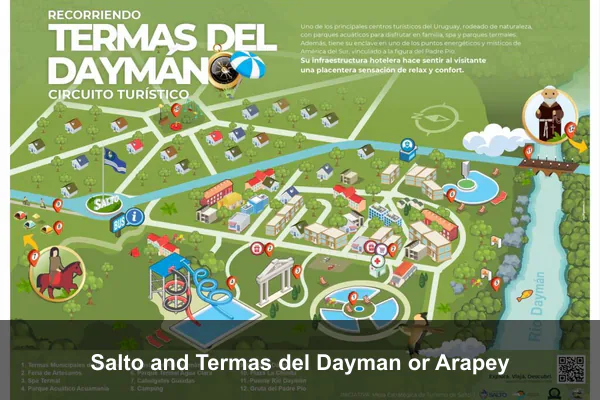
Finish your Uruguay itinerary in Salto Department, near the Argentina border, where the Termas del Dayman and Arapey combine hot-spring relaxation with easy riverfront city time in Salto. This northwest corner is ideal for families, wellness-focused travelers, and shoulder-season trips: soak in thermal pools, book spa treatments at resort complexes, stroll the waterfront, and enjoy calm evenings after sightseeing. The best months are May to September, when cool air makes the warm mineral waters especially rewarding. For logistics, fly domestically or take a long-distance bus to Salto, then continue by short taxi ride to either thermal area. For a quieter experience, aim for weekday afternoons instead of weekends and public holidays.
| Best for | Relaxation, families, shoulder-season travel |
|---|---|
| Location | Salto Department, near the Argentina border |
| Best time | May-September for cool-air hot-spring contrast |
| Access | Domestic flight or long-distance bus to Salto, then short taxi ride |
Additional Info: Weekday afternoons are usually quieter at the thermal complexes than weekends and public holidays.
Tips Before You Go
Uruguay uses the Uruguayan peso, but cards are widely accepted in cities and major beach towns; keep cash for small coastal villages and rural areas. Spanish is the main language, and mobile coverage is generally strong, though off-grid places like Cabo Polonio can have weak signal and limited power.
Long-distance buses connect most destinations, while a rental car is useful for Rocha, wine-country detours, and interior reserves. Summer (December-February) is busiest and most expensive on the coast, so book lodging early; shoulder seasons usually bring milder weather, fewer crowds, and better value.
