
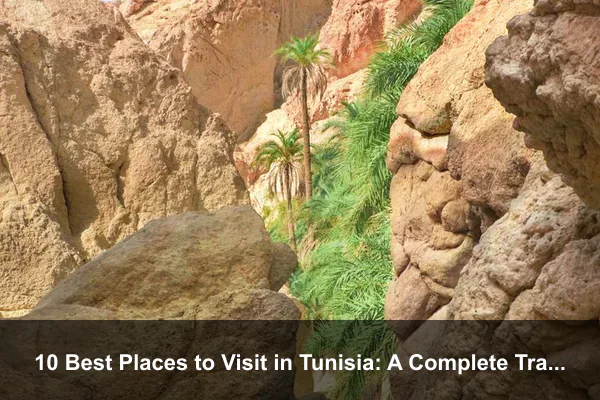
Tunisia packs Roman amphitheaters, Islamic holy cities, Berber villages, and Sahara dunes into a compact, road-trip-friendly country. This guide is structured as a practical north-to-south journey so travelers can connect major highlights with distinctive southern experiences without heavy backtracking.
Each section focuses on one specific place or tightly linked travel experience, with quick planning details for timing, location, and access. Use this framework to shape a 7 to 14 day itinerary that balances culture, coast, oasis landscapes, and desert nights.
Medina of Tunis and Zitouna Quarter
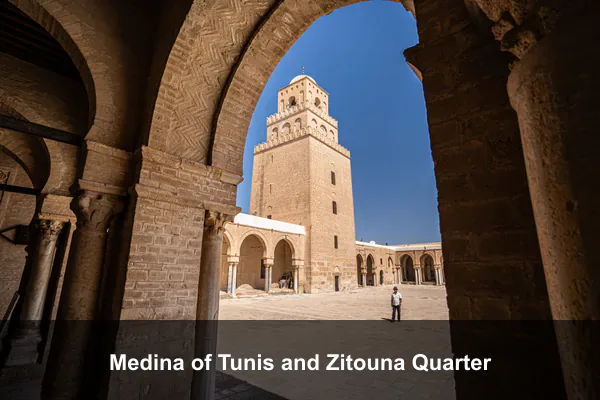
The Medina of Tunis and the Zitouna Quarter, in the Old City of central Tunis, are the place to experience Tunisia’s layered urban heritage: maze-like souks, carved-door palaces, and Ottoman-era architecture gathered around one of North Africa’s oldest Islamic centers, the Zitouna Mosque. Visit for atmospheric walks, artisan shopping, and courtyard houses turned into cafes and boutiques; mornings are best if you want to browse stalls before Friday midday prayers, when trade slows. For the most pleasant weather and liveliest street life, plan your trip in March-May or September-November. Reaching the area is easy, with a 10-15 minute taxi ride or metro trip from central Tunis.
| Best for | Historic souks and Ottoman-era architecture |
|---|---|
| Location | Old City, central Tunis |
| Best time | March-May and September-November |
| Access | 10-15 min taxi or metro from central Tunis |
Additional Info: Most stalls slow down around Friday midday prayers, so morning visits are easier for shopping.
Carthage Archaeological Site
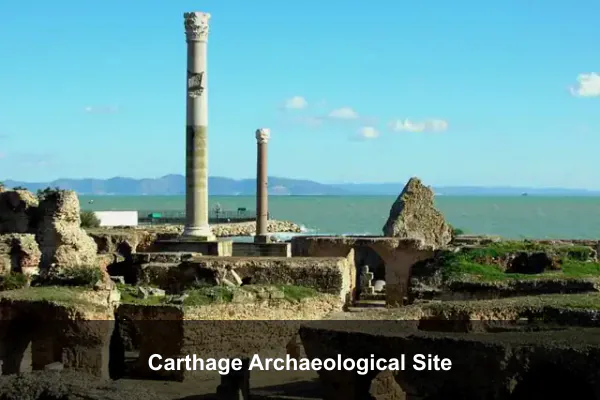
For travelers drawn to ancient history and sea-view ruins, the Carthage Archaeological Site in the Carthage suburb northeast of Tunis offers a striking walk through Phoenician and Roman layers, from hilltop remains at Byrsa to baths and theaters overlooking the Gulf of Tunis. Come in spring or autumn mornings for cooler temperatures and softer light, then link several zones in one outing. The easiest route is the TGM suburban train from Tunis Marine; once you start, buy a combined entry ticket at your first stop to cover multiple Carthage sites in a day.
| Best for | Ancient history and sea-view ruins |
|---|---|
| Location | Carthage suburb, northeast of Tunis |
| Best time | Spring and autumn mornings |
| Access | TGM suburban train from Tunis Marine |
Additional Info: Buy a combined entry at your first stop to cover multiple Carthage zones in one day.
Sidi Bou Said
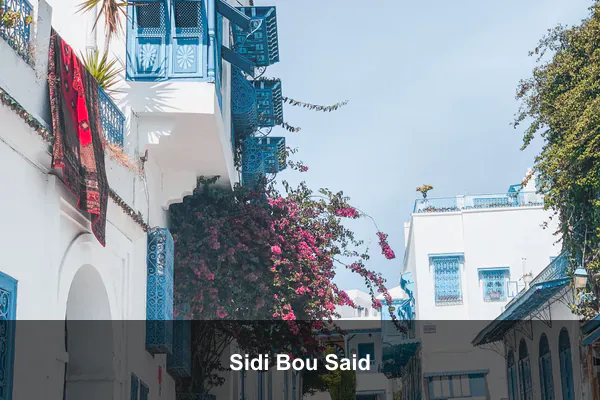
Sidi Bou Said is Tunisia’s postcard-perfect coastal village beside Carthage, best for photography, cafe hopping, and sunset strolls along blue-and-white lanes above the marina. Arrive in late afternoon, when soft light brightens doors and bougainvillea, then pause on terrace cafes for mint tea before walking to sea-facing viewpoints at golden hour. For a calmer experience, climb a few lanes above the main square, where you’ll find quieter overlooks and fewer tour groups. Getting there is simple year-round: take the TGM train or a short taxi ride from Tunis or Carthage, then explore on foot as the village glows into sunset.
| Best for | Photography, cafes, and sunset strolls |
|---|---|
| Location | Coastal village beside Carthage |
| Best time | Late afternoon to sunset, year-round |
| Access | TGM train or taxi from Tunis and Carthage |
Additional Info: Walk a few lanes above the main square for quieter viewpoints and fewer tour groups.
Kairouan Medina and Great Mosque of Uqba
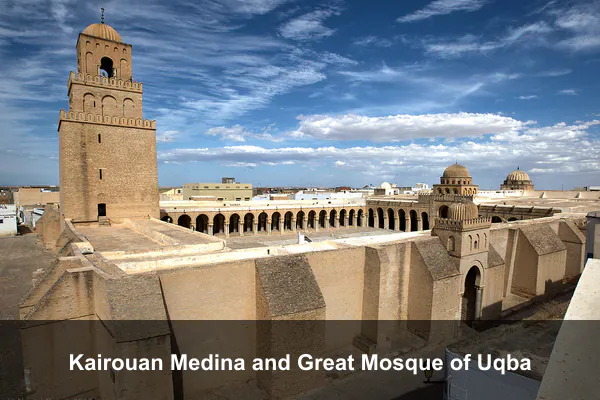
Kairouan Medina and the Great Mosque of Uqba offer one of Tunisia’s strongest experiences of early Islamic architecture and living craft traditions. In Kairouan, central Tunisia, this stop is best for religious heritage and tile craftsmanship: stroll the medina’s lanes, browse workshops making hand-painted ceramics, and admire the mosque’s historic courtyard and design from permitted visitor areas. October to April is the best time to visit, with cooler weather for walking. You can reach the city by louage or bus from Tunis, Sousse, or Sfax. Check same-day mosque access guidance locally before you go, since visitor rules may vary by date and prayer times.
| Best for | Religious heritage and tile craftsmanship |
|---|---|
| Location | Kairouan, central Tunisia |
| Best time | October-April |
| Access | Louage or bus from Tunis, Sousse, or Sfax |
Additional Info: Check same-day mosque access guidance locally, since visitor rules can vary by date and prayer times.
El Jem Amphitheatre
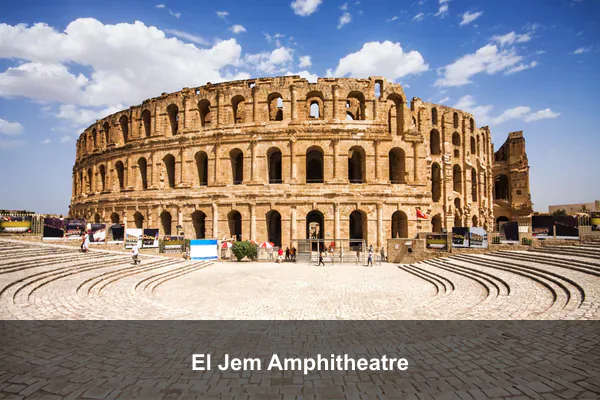
In El Jem, Mahdia Governorate, the colossal El Jem Amphitheatre is a must for travelers drawn to Roman engineering and sweeping panoramic views from the upper tiers. Wander the arena floor, vaulted corridors, and stairways to appreciate how this third-century monument rivaled Rome’s great venues, then continue to the nearby El Jem Museum, where intricate mosaics reveal how local elites decorated their homes. Visit in the morning or late afternoon during shoulder seasons for softer light, fewer crowds, and cooler temperatures. From the Sousse-Sfax corridor, it is straightforward to reach El Jem by train or shared louage, making this an easy historical stop on a wider Tunisia itinerary.
| Best for | Roman engineering and panoramic views |
|---|---|
| Location | El Jem, Mahdia Governorate |
| Best time | Morning or late afternoon in shoulder seasons |
| Access | Train or louage via Sousse-Sfax corridor |
Additional Info: Pair the arena with the nearby museum to see how local mosaics originally fit elite Roman homes.
Djerba Island (Houmt Souk and Erriadh)
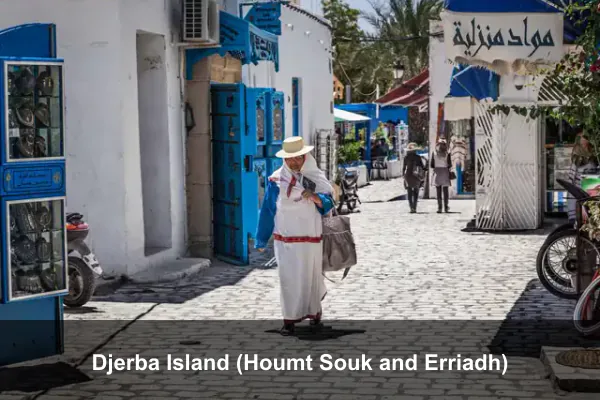
Djerba Island in the Gulf of Gabes is ideal for travelers seeking island culture, fresh seafood, and slow beach days with character. Split your time between the coast and the towns: browse spice stalls, ceramics, and textiles in Houmt Souk, then head to Erriadh for the open-air Djerbahood murals and its layered Muslim, Jewish, and Amazigh heritage. Start early in Erriadh to enjoy the street art before heat and traffic build, and keep afternoons for swimming or a long seaside lunch. The most comfortable months are May to June and September to October. Getting there is straightforward via Djerba-Zarzis flights or by ferry from Jorf.
| Best for | Island culture, seafood, and relaxed coast days |
|---|---|
| Location | Djerba, Gulf of Gabes |
| Best time | May-June and September-October |
| Access | Djerba-Zarzis flights or ferry from Jorf |
Additional Info: Start early in Erriadh to see Djerbahood murals before heat and traffic build.
Tataouine Ksour and Chenini
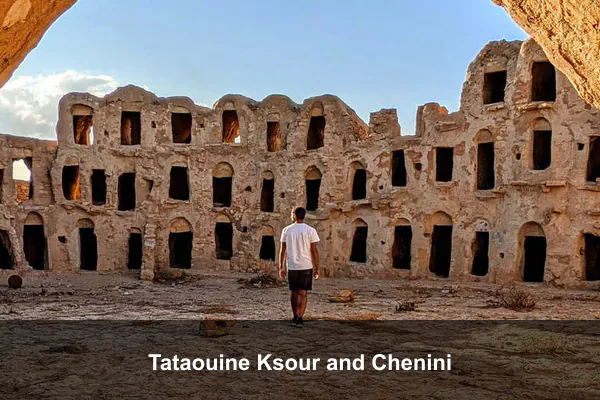
Tataouine’s ksour and nearby Chenini showcase one of Tunisia’s most striking desert-edge regions, where fortified granaries and Berber hill settlements define the landscape of the southeast. Visit to explore stacked stone ghorfas, wander old village paths, and take in wide valley panoramas from ridge-top viewpoints, especially near sunset. Hiring a local guide in Chenini is highly useful for trail navigation and for reaching better hilltop lookouts that many visitors miss. This area is best for travelers drawn to Berber architecture and dramatic scenery, and conditions are most pleasant from October to March. Access is easiest by private car or driver from Djerba or Medenine.
| Best for | Berber architecture and desert-edge scenery |
|---|---|
| Location | Tataouine region, southeast Tunisia |
| Best time | October-March |
| Access | Private car or driver from Djerba or Medenine |
Additional Info: Local guides in Chenini help with trail navigation and access to better hilltop viewpoints.
Matmata Troglodyte Villages
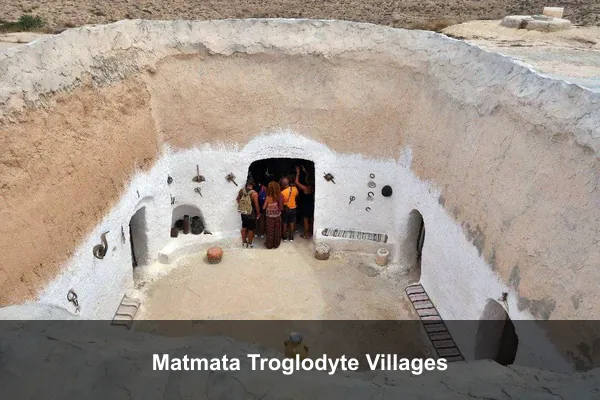
Matmata Troglodyte Villages in the Matmata area of Gabes Governorate are a standout stop for travelers drawn to troglodyte dwellings and genuine cultural encounters: homes are carved around sunken courtyards that stay cooler in heat and warmer in cold, while the surrounding lunar terrain is famous for film-location landscapes. Visit a local guesthouse or family home to understand how these underground spaces are engineered for harsh climate, then continue by road on the route linking Gabes, Douz, and Tataouine. The best time to go is November to March for milder weather, and since many courtyards are still lived in, always ask permission before taking photographs.
| Best for | Troglodyte dwellings and cultural encounters |
|---|---|
| Location | Matmata area, Gabes Governorate |
| Best time | November-March |
| Access | Road stop between Gabes, Douz, and Tataouine |
Additional Info: Ask permission before photographing family courtyards, as many homes are still lived in.
Tozeur and the Mountain Oases (Chebika, Tamerza, Mides)
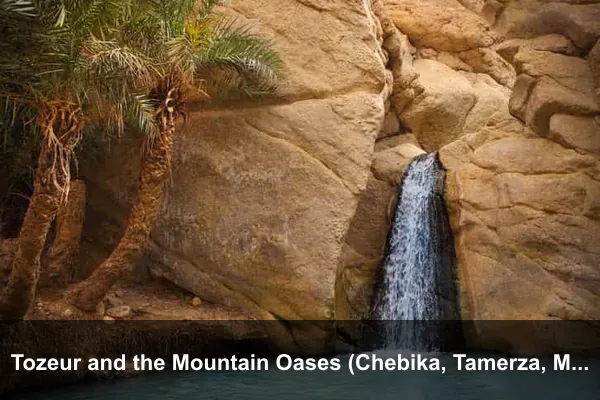
Tozeur, in Tunisia’s western Djerid region, is one of the best places to pair palm-grove city life with dramatic desert-edge scenery: spend mornings in Tozeur’s medina and date-palm oasis, then head toward the Algerian frontier for spring-fed Chebika, the waterfalls and abandoned village at Tamerza, and the canyon views of Mides. The area is best for oasis landscapes and short canyon hikes rather than long treks, making it ideal for a full-day adventure from town. October to April brings the most comfortable temperatures for walking and sightseeing. For logistics, reach Tozeur by domestic flight, train, or long-distance bus, then book a single 4×4 day circuit to cover all three mountain oases efficiently.
| Best for | Oasis landscapes and short canyon hikes |
|---|---|
| Location | Tozeur and western Djerid region |
| Best time | October-April |
| Access | Flight, train, or long-distance bus to Tozeur |
Additional Info: A single 4×4 day circuit is the simplest way to cover all three mountain oases efficiently.
Douz to Ksar Ghilane Sahara Experience
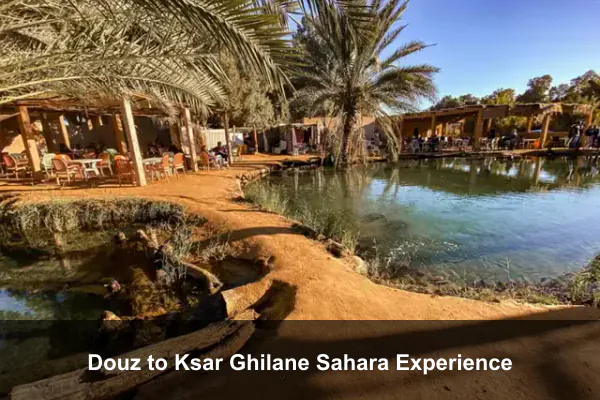
From the gateway town of Douz to the palm-ringed oasis of Ksar Ghilane, this Sahara stretch delivers Tunisia at its most cinematic: rolling Grand Erg Oriental dunes, sunset camel rides, and quiet nights in desert camps under clear stars. It is ideal for travelers seeking dramatic dune landscapes and an overnight desert-camp experience. The best time to go is November to February, when cooler conditions make long desert days more comfortable. Access is easiest on an organized 4×4 excursion from Douz or Matmata, which helps you reach remote areas safely and efficiently. Pack warm layers, because Sahara temperatures can drop sharply after sunset even in mild seasons.
| Best for | Dune landscapes and overnight desert camps |
|---|---|
| Location | Douz gateway and Ksar Ghilane oasis |
| Best time | November-February for cooler conditions |
| Access | Organized 4×4 excursion from Douz or Matmata |
Additional Info: Pack warm layers because Sahara temperatures can drop sharply after sunset even in mild seasons.
Tips Before You Go
Use a mixed transport strategy: trains for major coastal links, then louage, rental car, or a private driver for inland sites like Kairouan, Tataouine, and Matmata. Start early for archaeological and desert stops, keep water on hand year-round, and carry cash for small-town cafes, markets, and fuel stops.
Dress modestly in medinas and religious areas, verify opening hours around Friday prayers and holidays, and prebook Sahara camps in peak season. A local SIM card plus offline maps is highly useful once you travel deeper into southern Tunisia.
