
South Korea packs a remarkable range of travel experiences into a compact country: royal palaces, creative city districts, mountain parks, coastal walks, and volcanic island landscapes. This guide maps out 10 standout places across the country so you can build an itinerary that mixes culture, food, nature, and modern city energy without wasting transit time.
To keep planning practical, each section highlights who the place suits best, when to go, and the easiest way to get there. You can connect most stops by KTX high-speed rail and intercity buses, then use local transit cards in major cities for smooth day-to-day travel.
Gyeongbokgung Palace, Seoul
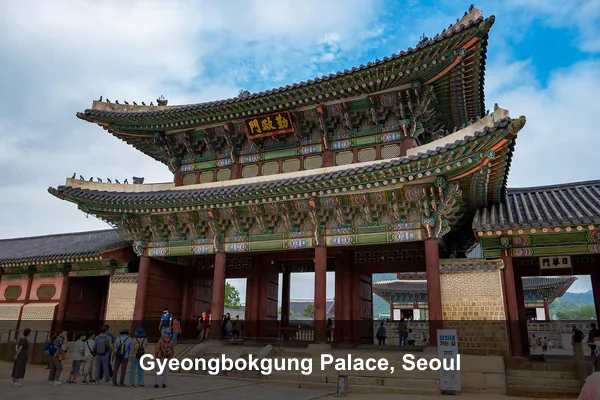
Gyeongbokgung Palace in Jongno-gu, central Seoul, is the top stop for history lovers and first-time visitors who want a clear window into Joseon royal life and architecture. Walk through Gwanghwamun Gate, watch the changing of the guard, and explore grand halls, pavilions, and museum exhibits that trace Korea’s dynastic past. For the best weather and colors, visit in Apr-Jun or Sep-Nov. The easiest route is Subway Line 3 to Gyeongbokgung Station, Exit 5. Rent a hanbok nearby for free palace admission and easier access to photo-friendly inner courtyards.
| Best for | History lovers and first-time Seoul visitors |
|---|---|
| Location | Jongno-gu, central Seoul |
| Best time | Apr-Jun and Sep-Nov |
| Access | Subway Line 3, Gyeongbokgung Station (Exit 5) |
Additional Info: Rent a hanbok nearby for free palace entry and better photo access in inner courtyards.
N Seoul Tower & Namsan Park, Seoul
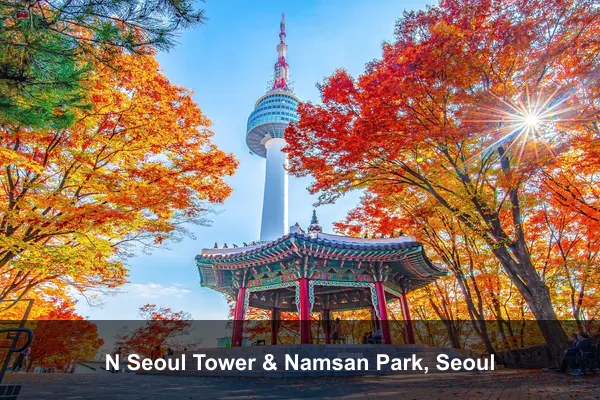
N Seoul Tower and Namsan Park offer one of Seoul’s most classic city-view experiences, combining romantic skyline panoramas with an easy nature walk on Namsan Mountain in Yongsan-gu. From the Myeongdong area, take the Namsan shuttle bus or cable car, then wander the park trails, pause at lookout points, and visit the tower observatory for sweeping views across the capital. It is especially ideal for sunset views and couples, with the best conditions on clear spring and autumn evenings. Arrive about one hour before sunset to enjoy the city in daylight, watch the sky shift at dusk, and then see Seoul glow as the night lights turn on.
| Best for | Sunset views and couples |
|---|---|
| Location | Namsan Mountain, Yongsan-gu |
| Best time | Clear spring and autumn evenings |
| Access | Myeongdong area + Namsan shuttle bus or cable car |
Additional Info: Go about one hour before sunset to catch both daylight views and city lights.
Korean DMZ Tour, Paju
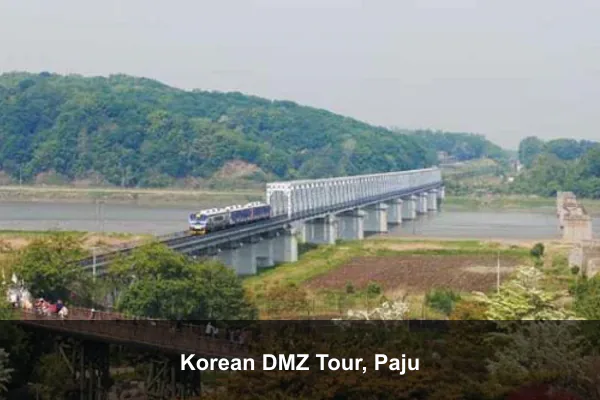
A Korean DMZ Tour in Paju is one of South Korea’s most powerful day trips, especially for travelers interested in history and current affairs. Located in Gyeonggi-do just north of Seoul, most guided itineraries stop at Imjingak Park, Dora Observatory, and the Third Infiltration Tunnel, giving you a rare, sobering look at the peninsula’s unresolved divide and present-day tensions. It adds modern political context that balances Korea’s cultural highlights. Tours operate year-round, but clear weekdays usually offer better views and smoother timing. Access is only via a pre-booked guided tour from Seoul, and you must carry your passport. Dress codes are enforced, so avoid ripped jeans and military-style clothing to prevent entry issues.
| Best for | History and current affairs travelers |
|---|---|
| Location | Paju, Gyeonggi-do (north of Seoul) |
| Best time | Year-round on clear weekdays |
| Access | Pre-booked guided tour from Seoul (passport required) |
Additional Info: Bring your passport and avoid ripped jeans or military-style clothing to prevent entry issues.
Jeonju Hanok Village, Jeonju
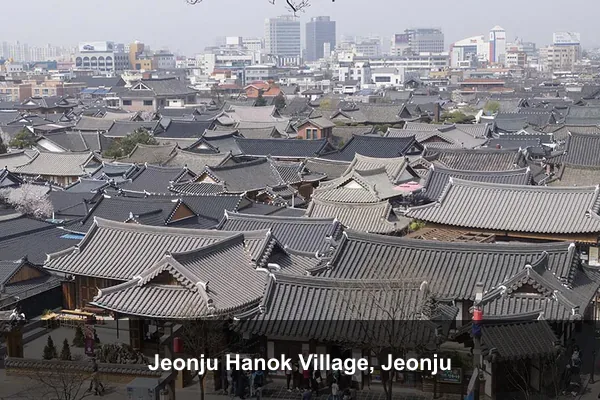
Jeonju Hanok Village in Wansan-gu, Jeonju, North Jeolla, is one of South Korea’s top destinations for food-focused cultural trips, where traditional hanok architecture, artisan workshops, and old lanes create a vivid sense of history. Come to wander the tiled-roof streets, stop at tea houses, and taste Jeonju bibimbap in its original regional style, especially at long-running local restaurants known for preserving local flavors. The best seasons are March to May and October to November, when mild weather makes walking most enjoyable. Access is straightforward: take the KTX to Jeonju Station, then use a local bus or taxi to reach the village.
| Best for | Food-focused cultural trips |
|---|---|
| Location | Wansan-gu, Jeonju, North Jeolla |
| Best time | Mar-May and Oct-Nov |
| Access | KTX to Jeonju Station, then local bus or taxi |
Additional Info: Try bibimbap in Jeonju for its original regional style, especially at long-running local restaurants.
Gyeongju Historic Areas, Gyeongju
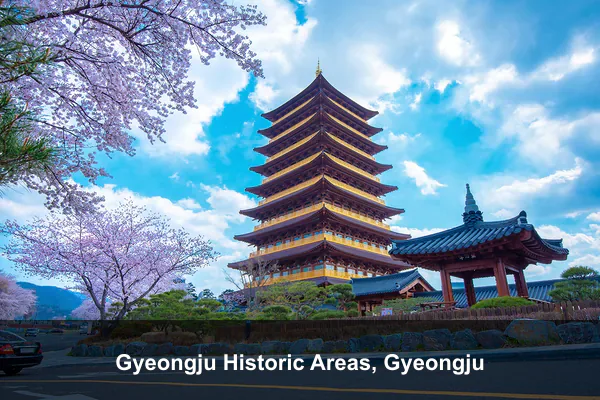
Gyeongju Historic Areas in Gyeongju, North Gyeongsang, feels like an open-air museum where Silla history lives on in royal tomb parks, temple sites, and ancient monuments, making it perfect for UNESCO site lovers and archaeology fans. Start at Daereungwon Tomb Complex, continue to Cheomseongdae, then ride to Woljeonggyo Bridge for a scenic heritage loop; renting a bike is the smoothest way to connect these landmarks. Visit in April–June or September–November for the most comfortable weather, and access the area by taking the KTX to Singyeongju Station, then a city bus or taxi into the historic core.
| Best for | UNESCO sites and archaeology fans |
|---|---|
| Location | Gyeongju, North Gyeongsang |
| Best time | Apr-Jun and Sep-Nov |
| Access | KTX to Singyeongju Station + city bus/taxi |
Additional Info: Rent a bike for a smooth route between Daereungwon, Cheomseongdae, and Woljeonggyo Bridge.
Haeundae Beach & Blue Line Park, Busan
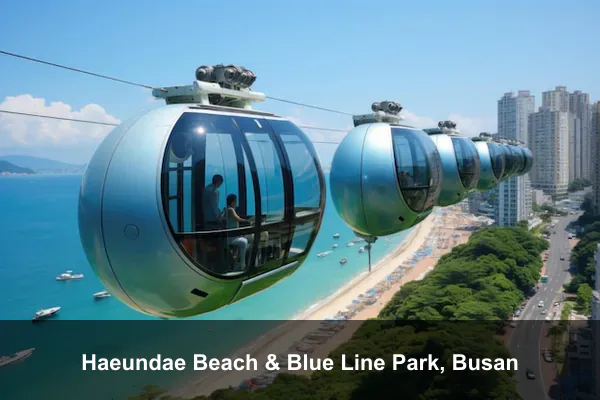
Haeundae Beach and Blue Line Park in Haeundae-gu, Busan, are ideal for coastal relaxation with lively urban beach vibes, where you can swim or sunbathe by day, stroll the broad shoreline promenade, and ride the scenic Sky Capsule or Beach Train for wide ocean views between Mipo and Cheongsapo. This is one of Busan’s signature seaside experiences, blending city convenience with postcard-worthy coastline. For the best conditions, visit in May–June or September–October. Access is straightforward via Busan Metro Line 2 to Haeundae Station, then a short walk or quick taxi ride to the beach and Blue Line Park stops. Book Sky Capsule sunset slots in advance, especially on weekends, since they sell out quickly.
| Best for | Coastal relaxation and urban beach vibes |
|---|---|
| Location | Haeundae-gu, Busan |
| Best time | May-Jun and Sep-Oct |
| Access | Busan Metro Line 2 to Haeundae Station |
Additional Info: Book the Sky Capsule in advance for sunset slots, which sell out quickly on weekends.
Gamcheon Culture Village, Busan
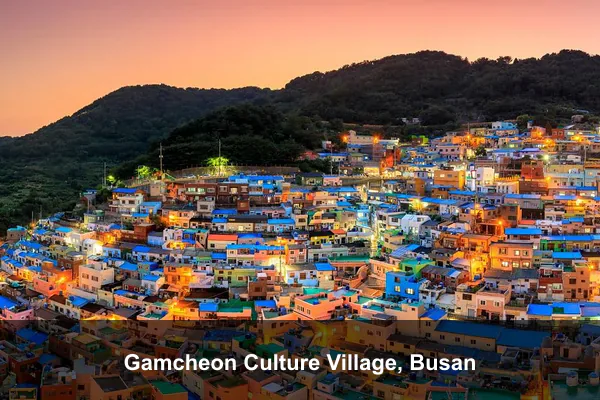
Gamcheon Culture Village in Saha-gu, Busan, is one of South Korea’s best stops for street photography, with stacked pastel houses, mural-covered stairways, and creative alleyways made for slow wandering. Spend a morning tracing art installations, small galleries, and lookout points while the lanes are quieter and light is softer. For the smoothest visit, grab the village stamp map at the entrance and follow its efficient viewpoint route to avoid backtracking and find the most photogenic corners. Get there by taking Busan Metro Line 1 to Toseong Station, then a local village bus up the hill; weekday mornings are ideal year-round.
| Best for | Street photography and creative neighborhoods |
|---|---|
| Location | Saha-gu, Busan |
| Best time | Weekday mornings, year-round |
| Access | Line 1 to Toseong Station + local village bus |
Additional Info: Pick up the village stamp map at the entrance to follow the most efficient viewpoint route.
Seoraksan National Park, Sokcho
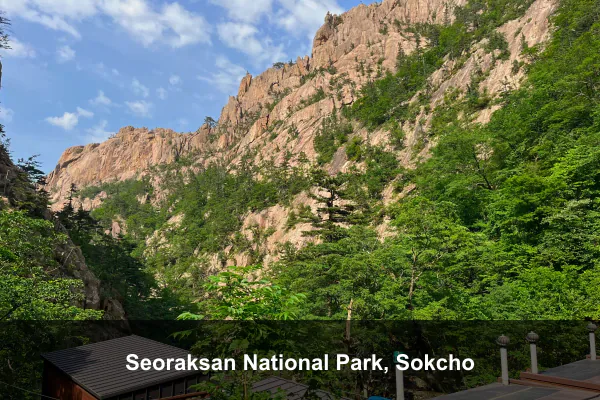
Seoraksan National Park in Sokcho, Gangwon-do is South Korea’s top mountain escape, best for hikers and nature photographers chasing jagged granite peaks, forested valleys, and wide summit views. Spend your day on iconic trails and add a temple stop at Sinheungsa for a cultural break between climbs. October brings the park’s most dramatic foliage, while late spring offers mild temperatures for longer, more comfortable hikes. Start early to avoid trail congestion on popular routes, and check cable car operations in advance since windy weather can cause suspensions. Getting there is easy: take an express bus to Sokcho, then a local bus or taxi to the park gate.
| Best for | Hikers and nature photographers |
|---|---|
| Location | Sokcho, Gangwon-do |
| Best time | Oct for foliage, late spring for mild hikes |
| Access | Express bus to Sokcho + local bus/taxi to park gate |
Additional Info: Start early to avoid trail congestion and check cable car operations in windy weather.
Seongsan Ilchulbong (Sunrise Peak), Jeju
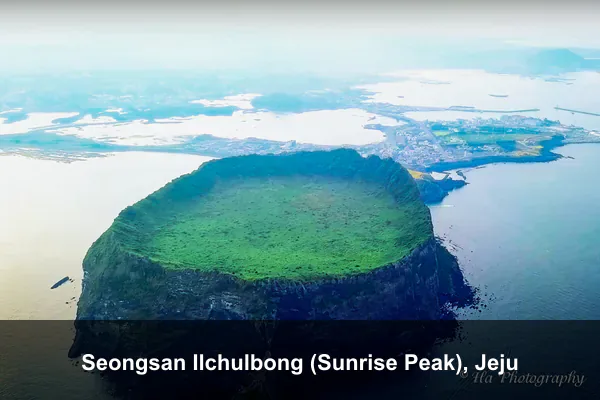
Seongsan Ilchulbong (Sunrise Peak) in Seongsan-eup on east Jeju Island is one of South Korea’s most rewarding dawn climbs, famous for volcanic scenery and sweeping ocean views as the sun rises over the crater rim. Arrive before first light, hike the stone stair trail to the top, and linger at the viewpoint for photos of Jeju’s dramatic coastline and nearby tuff cone formations. The best seasons are April–June and September–November, when skies are clearer and temperatures comfortable. From Jeju City, take an intercity bus to the Seongsan Ilchulbong stop, and wear grippy shoes since sea mist can make early-morning steps slick.
| Best for | Sunrise hikes and volcanic scenery |
|---|---|
| Location | Seongsan-eup, east Jeju Island |
| Best time | Apr-Jun and Sep-Nov; dawn visits |
| Access | Jeju intercity bus to Seongsan Ilchulbong stop |
Additional Info: Wear grippy shoes because the stone steps can be slick from sea mist in the early morning.
Suncheonman Bay Wetland Reserve, Suncheon
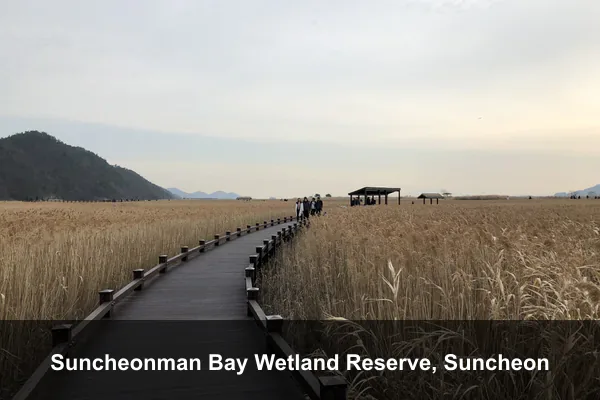
Suncheonman Bay Wetland Reserve in Suncheon, South Jeolla, is one of South Korea’s top picks for slow travel and birdwatching, with sweeping reed fields, migratory birds, and elevated boardwalks that reveal wide wetland views at an unhurried pace. The best time to go is October to November, when the reeds turn golden and migration season is active. Arrive in late afternoon to catch warm light over the marsh, then stay for sunset from Yongsan Observatory. Getting there is straightforward: take the KTX to Suncheon Station, then continue by local bus or taxi to the reserve.
| Best for | Slow travel and birdwatching |
|---|---|
| Location | Suncheon, South Jeolla |
| Best time | Oct-Nov for golden reeds and migration season |
| Access | KTX to Suncheon Station + local bus or taxi |
Additional Info: Visit late afternoon for warm light over the reeds, then stay for sunset from Yongsan Observatory.
Tips Before You Go
Use a rechargeable T-money card for subways and buses, and reserve KTX tickets early for weekend travel between Seoul, Busan, and Jeolla/Gyeongsang regions. If your schedule includes Jeju, compare flight times from Gimpo with ferry options from southern ports and keep one weather buffer day for outdoor plans.
Pack by season: humid heat and rain in summer, sharp cold in winter, and the most comfortable sightseeing in spring and autumn. Keep a translation app, a local navigation app, and your passport handy for hotels and DMZ tours, and carry a backup payment method since some smaller eateries still prefer cash.
